"many" - Google News
October 02, 2020 at 03:36AM
https://ift.tt/3inIm5v
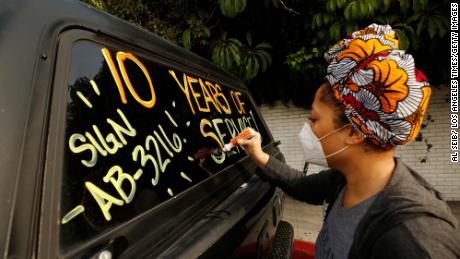
California governor vetoes return-to-work bill for many laid-off workers - CNN
"many" - Google News
https://ift.tt/2OYUfnl
https://ift.tt/3f9EULr

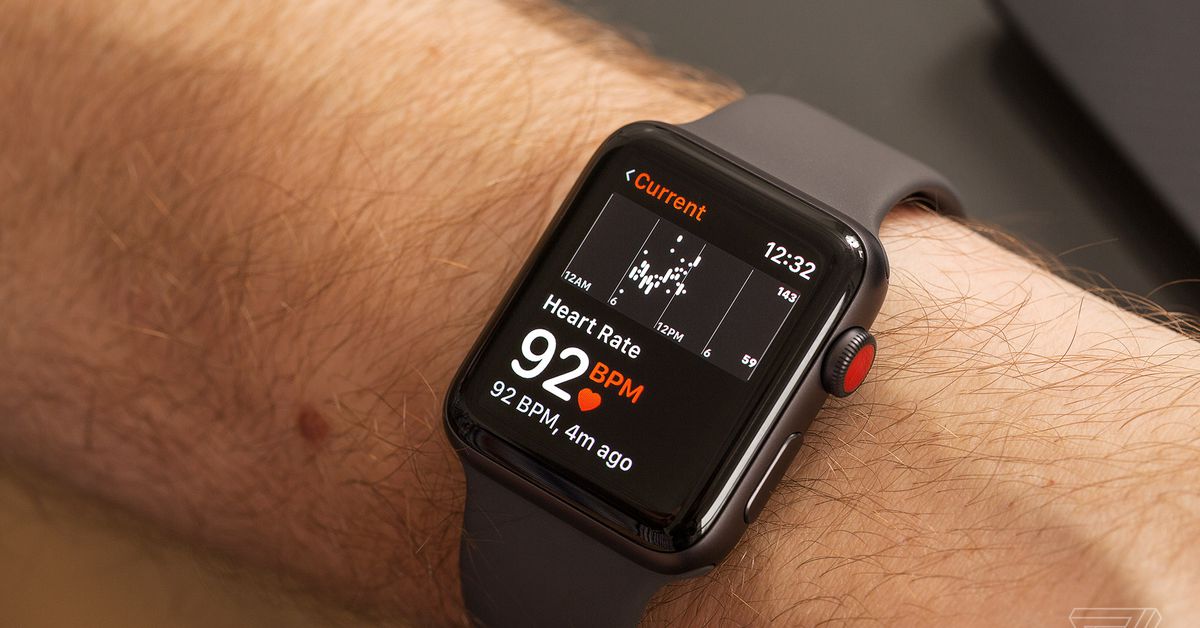
The heart monitoring feature on the Apple Watch may lead to unnecessary health care visits, according to a new study published this week. Only around 10 percent of people who saw a doctor at the Mayo Clinic after noticing an abnormal pulse reading on their watch were eventually diagnosed with a cardiac condition.
The finding shows that at-home health monitoring devices can lead to over-utilization of the health care system, said study author Heather Heaton, an assistant professor of emergency medicine at the Mayo Clinic College of Medicine, in an email to The Verge. That may be expensive for patients and for the system as a whole, and it may take up doctor and patient time unnecessarily.
Heaton and the study team scanned patient health records at every Mayo Clinic site, including offices in Arizona, Florida, Wisconsin, and Iowa, for mentions of the term “Apple Watch” over a six-month period from December 2018 to April 2019. The window came just after Apple introduced a feature to detect abnormal heart rhythms and after publication of a study tracking how well the watches could detect atrial fibrillation.
They found records of 264 patients who said their Apple Watches flagged a concerning heart rhythm. Of that group, 41 explicitly mentioned getting an alert from their watch (others may have had an alert, but it wasn’t mentioned specifically in their health record). Half of the patients already had a cardiac diagnosis, including 58 who’d been previously diagnosed with atrial fibrillation. About two-thirds had symptoms, including lightheadedness or chest pain.
Only 30 patients in the study got a cardiac diagnosis after their doctors visit. Most of the concerning heart monitor data, then, were probably false positives, the study concluded. False positives, even though the patient ends up being healthy, can still cause problems: they can push patients to get unnecessary health care and cause stress and anxiety. Even people who don’t have symptoms, like some people in this study, may still feel the need to talk to a doctor about an abnormal flag on a device like an Apple Watch.
“It is hard for a user to ignore an alert that they could have a serious medical condition,” said Kirk Wyatt, an assistant professor of pediatrics at Mayo Clinic and author on the study, in an email to The Verge.
Some of these trends aren’t new. For years, doctors have watched patients come into their offices after researching medical conditions online, Heaton said. Smartwatches, though, passively monitor people who aren’t necessarily looking for a diagnosis. And Apple isn’t the only company flagging users with what its products pick up as abnormal heart rhythms: Samsung’s Galaxy Watch 3 has an EKG feature, as does Fitbit’s Sense smartwatch. While the percentage of people who get an abnormal heart reading on one of these devices could be low (a study of the Apple Watch found that less than 1 percent of users had an alert), millions of people use these products — so there could still be thousands of additional people going to the doctor based on them.
These types of products “blur the line between rigorously-studied medical devices and wellness tools,” Wyatt said. People may not understand how well they actually work and what they should actually be used for. People who already have an atrial fibrillation diagnosis, for example, aren’t supposed to use the Apple Watch feature — but over 20 percent of the people in the Mayo Clinic study did have that diagnosis already. The feature also isn’t supposed to be used by anyone under 22 years old, but nearly two dozen people with records in the study were below that cutoff.
Smartwatches might be useful ways for people to monitor their health on their own, at home, but it’s still not clear what their utility could be. Most of the research done on the Apple Watch, for example, focuses on how well it can detect atrial fibrillation, but it doesn’t track how well it can actually be used as a screening tool in the context of the health care system. Without that information, doctors like Heaton worry that the devices could cause unnecessary confusion and stress for patients. “Understanding context and the nuances of illness is important and at this point cannot be fully understood purely by a wearable medical device,” she said.

President Donald Trump often touts how well the economy is recovering, even in the midst of a pandemic, and he mentioned it again — as well as how that benefits Americans’ 401(k) plans — during the presidential debate against Democratic nominee Joe Biden on Tuesday.
“When the stock market goes up, that means jobs,” the president said during the debate. “It also means 401(k)s.” The two candidates were in the middle of a heated argument over whether or not the economy was doing well when Trump replaced President Obama in office.
The stock market is recovering from extreme volatility in March, when much of the country was shut down in response to the coronavirus crisis. The market was always expected to recover, though it did so sooner than some experts anticipated. That rise typically benefits 401(k) plans and other retirement investment accounts, depending on what investments are held.
Does this mean Americans want to thank Trump? Yes and no, according to a September Bankrate survey. Slightly more than a quarter of respondents said their financial situations improved since Trump took office, while 40% said they’re in the same financial shape as they were before January 2017, and another quarter said their situations have gotten worse.
Not all Americans have 401(k) plans. Many employers, especially smaller businesses, do not offer these types of retirement plans to their employees because of complexity or cost. And even when they do, some workers don’t participate in them because they can’t afford to or they may not know about these benefits. Only about a third of Americans were invested in a 401(k) plan in 2017, according to U.S. Census Bureau data.
Still, Americans weren’t sure if either candidate would help their personal finances. Almost four in 10 people (39%) said a Joe Biden/Kamala Harris ticket would be better for their finances, and 35% said a Donald Trump/Mike Pence combination would do the trick. Another 15% said they weren’t sure who would be best for their money and 11% said neither. The younger the voter, the more likely they are to be undecided, the survey found. “Americans’ view of their own individual finances is much more complex than to be singularly focused on the performance of the stock market,” said Mark Hamrick, senior economic analyst at Bankrate.
With the economy recovering, people who continued to contribute to their portfolios, or stayed with their investment strategies, are in “good or better shape with the 401(k) balance versus pre-pandemic,” said Stuart Robertson, chief executive officer of ShareBuilder 401(k), which sells and manages businesses’ retirement plans. But not everyone will experience that boost. Millions of Americans lost their jobs, which would affect if and how they contribute to a retirement plan, and others saw a reduction in wages, potentially halting any contributions they could afford.
“Many businesses and jobs have been impacted, so some have lost the ability to contribute to their 401(k) due to job loss,” he said.
The crisis won’t deter every American from retiring — even with so much volatility this spring, retirement savers showed they were disciplined with their investment strategies, according to Fidelity Investments data.
The success of the stock market doesn’t affect 401(k) plans equally. Some portfolios may be heavily invested in assets tied to the market’s performance, such as an index fund that tracks the overall market, Hamrick said. There are so many underlying variables that impact a balance’s rise or decline, including which asset classes they’re invested in, the percentage of their portfolio is invested in those assets and interest rates.
When a person chooses to retire also affects how crucial the volatility is to an individual’s current financial situation. Someone retiring in three or four decades will see years of market ups and downs before they need the money in their portfolios, while someone retiring in the next few years would be more sensitive to major market movement.
Still, the stock market recovery and rising 401(k) balances as a result, are common talking points of the president’s. During the summer, Trump said with a different president, 401(k) plans would “drop down to nothing.”

A Kansas woman who was shot and killed by a sheriff’s deputy after refusing to pull over was unarmed and posed no danger to him or the public, according to a federal lawsuit filed Tuesday.
The court filing paints a different picture to that recounted by authorities following the fatal shooting in Wichita of 51-year-old Debra Arbuckle of Andover by Sedgwick County Deputy Kaleb Dailey in the early morning hours of Dec. 30, 2019.
Authorities said at the time that the deputy fired several rounds after Arbuckle put her car into reverse and accelerated toward deputies. The sheriff’s department said the deputy feared for his life.
The family’s attorney, Michael Kuckelman, said multiple law enforcement videos show that while Arbuckle did put her car in reverse and the backup lights came on, she never accelerated toward the deputies. Furthermore, Dailey had just rammed her car onto a grassy area and her vehicle was surrounded by patrol cars so she couldn’t go anywhere, Kuckelman said. Dailey got out of his car and positioned himself so his vehicle separated him from Arbuckle.
“He wasn’t in any sort of danger,” Kuckelman said. “He shot her through the passenger window and he shot over his patrol car in order to shoot her.”
Arbuckle couldn’t have reached him even if she had wanted to, he said, noting that authorities had earlier spiked her tires during a pursuit so she was unable to drive faster than 15 mph (24 kilometers per hour). Deputies chased Arbuckle because her Volkswagen sedan had a license plate that belonged on a Chevy pickup truck.
The lawsuit, filed by Arbuckle’s son Alek Hansen, seeks unspecified general and punitive damages.
Lt. Benjamin Blick said the Sedgwick County sheriff’s office would not comment on the complaint. A home phone number for Dailey could not be found.
Sedgwick County District Attorney Marc Bennett said in an emailed statement that the case remains under review and that no charging decision has been made. He declined to comment further.
Arbuckle’s family wants the sheriff’s department to fire Dailey and for his law enforcement certification to be revoked. They also want Bennett to file criminal charges, Kuckelman said.
Dailey had been on the other side of Wichita when the chase began shortly after 3 a.m., and he raced across the city to join in, at one point reaching 142 mph.
“That in of itself should result in termination,” Kuckleman said. “We can’t have law enforcement driving at speeds of 142 miles an hour through Wichita to go to the east side and join a chase already underway about a wrong license plate being on a vehicle. That is reckless.”
Was this article valuable?
Here are more articles you may enjoy.
Get the insurance industry's trusted newsletter

By JULIE WATSON | The Associated Press
SAN DIEGO — A federal judge on Wednesday ordered the Trump administration to save more than 9,000 U.S. slots for visa lottery winners affected by the government’s freeze on green cards earlier this year. But tens of thousands of other visa lottery winners will be out of luck.
U.S. District Court Judge Amit Mehta acknowledged that his order will mean only about half of the so-called diversity visas issued normally each year will be used. He said in his ruling that he gave the State Department leniency due to the coronavirus pandemic.
Mehta rejected a request by lawyers to order 30,000 slots be saved for people who won the lottery but hadn’t yet been vetted. With about 15,400 visas issued so far in the 2020 fiscal year that ended Wednesday, the additional 30,000 sought by advocates for the lottery winners would have brought the total close to the annual average of 47,404 over the previous 18 years.
The judge said that the impact of COVID-19 on the State Department’s processing capacity needed to be taken into account, bringing him to order a total of 9,095 slots be saved.
“The problem with Plaintiffs’ proposed number is that it asks the court to treat FY 2020 as if it were an ‘average’ year. But, to state the obvious, it has been anything but average,” Mehta wrote in his ruling. “The COVID-19 pandemic has caused worldwide operational disruptions of the State Department’s consular and visa processing operations.”
The United States makes available up to 55,000 visas a year for immigrants whose nationalities are underrepresented in the U.S. population.
The winners are randomly chosen from a pool of about 14 million applicants to be given green cards that would let them live permanently in the United States.
But the winners must be vetted and have the visas in hand by Sept. 30 of the year they were chosen or they lose out.
This year, the State Department had issued little more than 12,000 visas for the 2020 lottery when President Donald Trump in April extended a freeze on many green cards issued outside the United States to the end of the year, including the lottery’s visas.
On Sept. 4, Mehta ordered the State Department to resume issuing the visas ahead of the Sept. 30 deadline, partially reversing the freeze.
On Wednesday, the judge ordered the State Department to put on hold 9,095 winning visa lottery numbers past the deadline so they can be processed pending a final judgement.
Rafael Urena, who is representing more than 1,000 visa lottery winners, said the order sends a lifeline to the group.
“The Diversity Visa program has been the United States’ beacon of hope to the world for 30 years,” he said. “To see it unlawfully dismantled by the Trump administration was a tragedy. Today’s order gives hope to many of the plaintiffs that the American dream continues.”
U.S. Department of Justice lawyer Thomas York did not immediately respond to an email from The Associated Press requesting comment about Wednesday’s order.
The administration said it halted the issuance of green cards to free up jobs in the coronavirus-wrecked economy — a reason the president has used to achieve many of the cuts to legal immigration that eluded him before the pandemic. The freeze also applies to people seeking temporary work visas at high-tech companies, summer camps and multinational corporations.
Trump has long sought to scrap the diversity visa lottery, saying it brings “the worst of the worst.”
Mehta, who was appointed by President Barack Obama, made clear in his Sept. 4 ruling that he disagreed with Trump’s characterizations.
“Diversity visa lottery winners are people who have come to this nation, like millions before, to seek a better life for themselves and their families, and to pursue the American Dream,” he wrote. “They do not deserve to be caricatured as common criminals, or to be used as a political wedge issue.”The U.S. government runs the program, and citizens of qualifying countries are the ones who decide to bid for the visas. Foreign governments do not choose who applies or ultimately receives a visa.
Applicants must have graduated from high school or have two years of experience in a selection of fields identified by the U.S. Labor Department. The winners cannot have a criminal record, and they must have a U.S. sponsor willing and able to support them until they get established. More than 80,000 applicants were named winners, so they had to race against each other to get the visas made available.
_____
Associated Press reporter Elliot Spagat contributed to this report.
Alcohol-related deaths are on the rise in the U.S., a report published Thursday by the Centers for Disease Control and Prevention finds.
The report, from the CDC's National Center for Health Statistics, found that deaths from alcohol use increased by 43 percent from 2006 to 2018.
Full coverage of the coronavirus outbreak
The findings, which don't include data from this year, come as other research highlights how drinking remains a problem for many in the U.S., particularly among women.
Indeed, the CDC report found that the impact was greatest on women. "While rates were higher for males than females for each year," the study authors wrote, "the rate of change was greater for females."
The report didn't give reasons for the increase among women, but it suggested that women living far outside city limits may have been more at risk. "From 2000 through 2018, greater percentage increases in the rates occurred in rural areas compared with urban areas overall, for both males and females," the authors wrote.
"In more recent years, rates of alcohol-induced deaths were higher in rural areas than urban areas; by 2018, rates were 18 percent higher for males and 23 percent higher for females in rural compared with urban areas," they wrote.
Although the study didn't explore reasons behind the increase in alcohol-related mortality, the years coincided with an economic recession.
Similar stressors are occurring now: Social isolation, employment insecurity and crushing household and child care demands have amplified stress levels for women so much that they're coping by drinking to excess.
"The most problematic alcohol use happened around March and April" of this year, said Lindsey Rodriguez, an assistant professor of psychology at the University of South Florida. Rodriguez was an author of a study published online in June in the journal Addictive Behaviors that linked pandemic stress to a spike in alcohol use.
Excessive alcohol consumption is known to have deleterious health effects, including alcohol poisoning, liver cirrhosis, heart disease and a number of alcohol-related cancers.
Rodriguez and her colleagues found that drinking among men stressed about Covid-19 remained relatively stable, while women's stress drinking increased significantly.
The greater women's stress, Rodriguez found, the more they drank. And "having children in the home was associated with more drinking," she said.
Download the NBC News app for full coverage of the coronavirus outbreak
Another study published Tuesday in JAMA Network Open echoed the increase in alcohol consumption related to the pandemic. The study included survey results from more than 1,500 adults.
Compared to 2019, American adults have sharply increased their alcohol intake in 2020, by 14 percent, said an author of the study, Michael Polland, a sociologist at the RAND Corporation.
Indeed, the analytics company Nielsen found that online alcohol sales soared by 524 percent in April, compared to the year before.
"The changes were larger for women," Polland said, adding that women increased their heavy drinking episodes (defined as at least four drinks in one setting) by 41 percent from 2019 to 2020.
Why? Put simply, women often "bear the brunt of parenting, caring for children and the family," said Natalie Crawford, an assistant professor of behavioral, social and health education at the Emory University Rollins School of Public Health in Atlanta.
And alcohol tends to be the "easiest coping strategy," Crawford said, suggesting that the body's neuroadaptive system, which helps us cope with stress, has been altered.
"Over a short time period, the system does a really good job of adapting to stress," Crawford said, "but this is chronic."
The long-term implications of such stress, as well as the coping mechanisms that follow, remain unknown.
"We really don't have a good understanding of what happens when we are in social isolation for such an extensive period of time," Crawford said.
Experts in substance abuse say alcohol use, particularly among women with children, is highly stigmatized. "Women are going to be less likely, and more fearful, to seek help" for their problematic alcohol use, Crawford said.
She added that addiction treatment resources will be even more important once lockdowns are lifted.
"Once this is all over, we will have to reconcile that," Crawford said. "We will have to think about how we reach populations that have been affected and are not integrated into existing treatment programs."
Follow NBC HEALTH on Twitter & Facebook.