Search

Sunday, February 28, 2021

The danger of avalanches: Will 2021 be the worst year ever? - CBS News

tetekrefil.blogspot.com

Mountain mornings above Ketchum, Idaho often begin with cannon fire. The enemy? Avalanches. The Sun Valley Ski Patrol uses explosives to test the snowpack on the mountainside. It's one way Scooter Gardner, head of snow safety for the resort, keeps his guests safe.

"Our ultimate goal is to give the skiing customer as much skiable terrain as possible, that is as safe as possible," Gardner told correspondent Serena Altschul.

To the blissfully unaware, it might seem like overkill. But beyond the boundaries of America's ski resorts, the threat from avalanches is a very real part of mountain life. 

Last month snowmobilers got caught in an avalanche in Utah:

"All the snow is, is a horizontal representation of the season's weather," said backcountry guide Chris Marshall.

To really understand the danger of snowpack on a steep slope, you have to dig a little deeper.

Since the start of the pandemic, enrollment at avalanche classes by Sun Valley Guides has more than doubled with people looking to safely get away into America's wild and rugged backcountry.

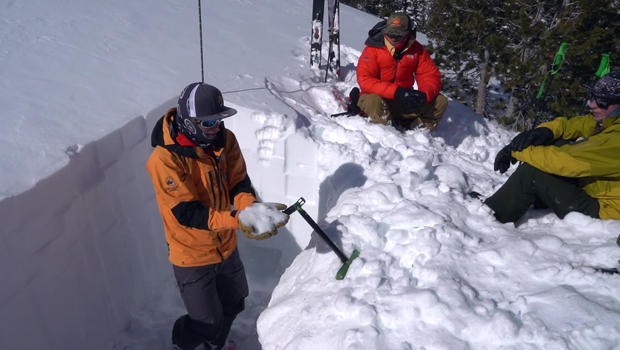
Marshall walks students the basics of search and rescue, terrain management, and – critically – how to "read" the layers of snow like a geologist reads sediment. "The more readily this slides off, that's going to show poor bonding between those layers," he said, slicing into the snowpack.

"When you've got snow that looks like sugar, and especially when you can see the individual crystals with your naked eye, these are facets."
snow-pack-physics-620.jpg
A lesson in snowpack physics by guide Chris Marshall. CBS News

Snow scientists say climate change has heightened avalanche risk. Throughout much of the West there was heavy Fall snow followed by drought. That formed a weak layer which was then buried under several feet of snow – prime conditions for the most dangerous type of avalanche, what is called a slab avalanche. Bruce Tremper, who was the head of the Utah Avalanche Center for some 30 years before retiring in 2015, described a slab avalanche as like "a cohesive plate of snow, like a magazine sliding off of an inclined table."

"Ninety-three percent of the time, that avalanche is triggered by the victim or somebody in the victim's party," Tremper said. "It means we have a choice. We can avoid avalanches if we want to by not triggering avalanches."

In 1977, as a young member of the Ski Patrol at Bridger Bowl in Montana, Tremper was warned to stay off of a slope that was a notorious avalanche path … not that he listened.

"And the first thing that happens, it feels like somebody pulls out the rug from underneath me, and I flop down on the snow and it just pulled me downhill," he recalled.

Tremper credits managing to grab a tree with saving his life.

"And I just felt like I was underneath this huge waterfall getting pounded to death. I was just tumbling down the slope, going head over heels and all over the place. Hat, mittens gone, skis gone. I mean, snow is going everywhere, down my underwear, under my eyelids. And when it came to a stop, I was buried up to my chest."

When snow is moving down a slope, it often feels like water. But when it comes to rest, it tends to set like concrete. Had Tremper been fully buried, he might have had only about 15 minutes to live.

Ethan Greene, director of the Colorado Avalanche Information Center, said, "One of the really important misconceptions is that you can dig yourself out if you get buried. And just because of how the avalanche flows when you get buried, the snow compacts – it's really, really hard."
avalanche-3-620.jpg
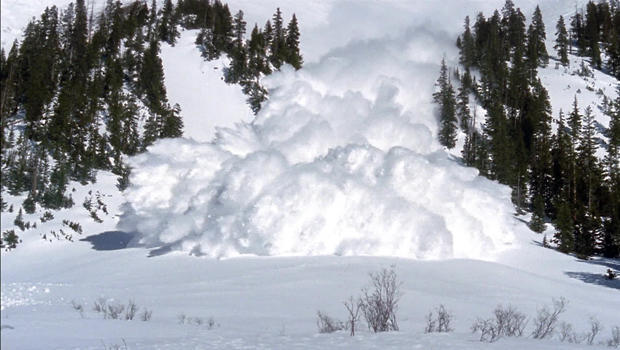
In Western states this winter's weather has produced snowpack conditions that are making avalanches even more threatening than usual. CBS News

Of current snow conditions, Greene said, "It certainly is going to be one of the worst years in a long time. I'm hoping it's not going to be the worst year."

In fact, the week of January 30 was the worst week for avalanche fatalities in the U.S. since 1910, with 15 dead. And the season is far from over.

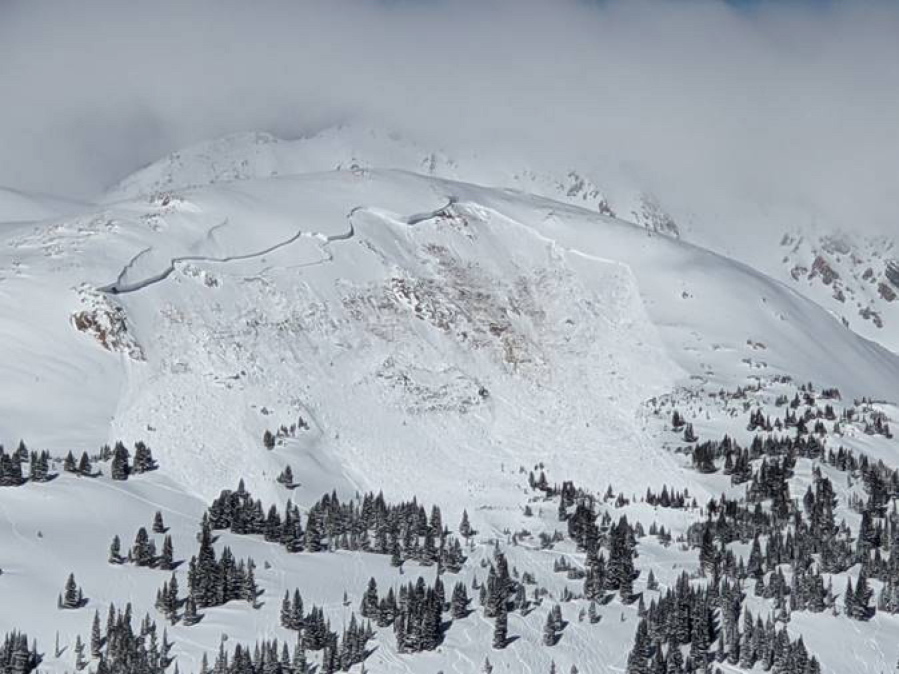
Greene said, "You know, it's a pretty amazing natural hazard in that you have a person that goes across a snow slope and can release maybe thousands of tons of debris that goes rolling down the hill. One of the accidents we had this last week, the avalanche itself, the break in the snow was over 3,000 feet wide. And that's triggered by a person."

That sort of risk-taking can now have legal consequences: In Colorado, two snowboarders are facing reckless endangerment charges for causing an avalanche above I-70.

Altschul asked, "If there's a high avalanche risk, do you generally shut down public lands?"

"Typically, we don't do that," Greene replied. "Part of our culture in the United States, and certainly the western United States, has a high degree of value on freedom and personal responsibility. So, these are our public lands. They're there for everybody to enjoy. And that's a wonderful thing for all of us to have access to.

And with that freedom to use those lands comes the responsibility to take care of ourselves and then also take care of the other people in our communities."

So, viewer beware: If you're pushing the boundaries, you're on your own...

Altschul asked Tremper, "What are the best ways to survive an avalanche?"

"It's kind of like asking, 'What do I do if I get in a car wreck,' you know?" Tremper replied. "And the answer is, there's not much you can do because, you know, these things are really, really dangerous. And by the time you've triggered that avalanche, you've already made all the mistakes."

      
For more info:

     
Story produced by Anthony Laudato. Editor: David Bhagat. 

Let's block ads! (Why?)


"danger" - Google News
February 28, 2021 at 09:11PM
https://ift.tt/3r9ezms

The danger of avalanches: Will 2021 be the worst year ever? - CBS News
"danger" - Google News
https://ift.tt/3bVUlF0
https://ift.tt/3f9EULr

Where are Mexico's disappeared? Many have been in government graves all along - Los Angeles Times

Wildfire Home Preparation: Getting Ahead Of Potential Danger - Fox 4 - Fox 4

tetekrefil.blogspot.com

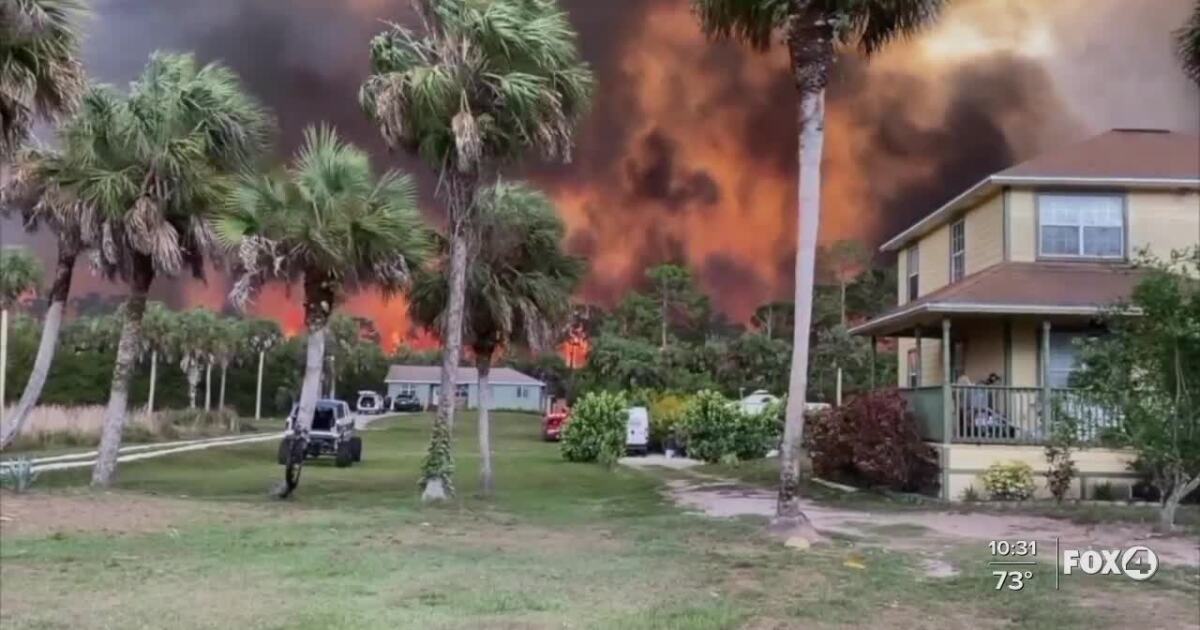
CAPE CORAL, Fla. — Roughly a year ago, nearly 8,000 burned in the Golden Gate Estates, as a massive wildfire ripped through the community.

Fast forward to 2021, as we prepare for wildfire season here in Southwest Florida, Melinda Avni with Florida Forest Service says, numbers show it’s getting dryer here in the sunshine state.

“We’re sitting at about 424 for Collier County right now and on average, for the 3 counties, it's about 409. So, it's getting dryer, and once that drought kicks up to about 500, we start to get very concerned, that means our surface fuels are very dry, our trees are very dry. While there is still moisture in the soil, and above the water table level so we know we can reach it easily, it's not necessarily staying in the trees,” said Avni.

Avni says trees, no matter the size, along with debris can add fuel to the flames.

“It doesn’t look like much but what’s behind us shows exactly what we're talking about. This area here goes from 1-hour fuels to 100 hours fuels, If you look around and see more of the larger trees, you’re getting more to 1000-hour fuels,” said Avni.

Now while it may be tough to go and inspect every tree, or blade of grass to determine a fuel level, Avni says, simply start by securing your home.

‘The ember zone is basically anything a mile from the fire. So if you're within a mile of undeveloped or wildland area, there’s a chance that a wildfire should erupt there, the embers from that can impact your home. So, keep that checked, keep that defensible space, that first 5ft is crucial, ideally you want 30ft. Don’t have trees very close together, don't have them right against your home, keep that grass cut neat,” said Avni.

Right now, the biggest concern for Florida Forest Service is patterns show they are moving into more of a fire year and away from a fire season. Avni says after securing your home if you need a second opinion, Florida Forest Service is ready to take your call.

“We can come out, we can take a look, we can tell them what their actual risks are. We can point them to some resources that could help them make some changes to improve their outcomes,” said Avni.

For more information on how to get in contact with the Florida Forest Service, head to their website.

Let's block ads! (Why?)


"danger" - Google News
February 28, 2021 at 03:23PM
https://ift.tt/2NMVJTx

Wildfire Home Preparation: Getting Ahead Of Potential Danger - Fox 4 - Fox 4
"danger" - Google News
https://ift.tt/3bVUlF0
https://ift.tt/3f9EULr
Juneau sets up evacuation center for residents affected by extreme avalanche danger - KTOO

tetekrefil.blogspot.com
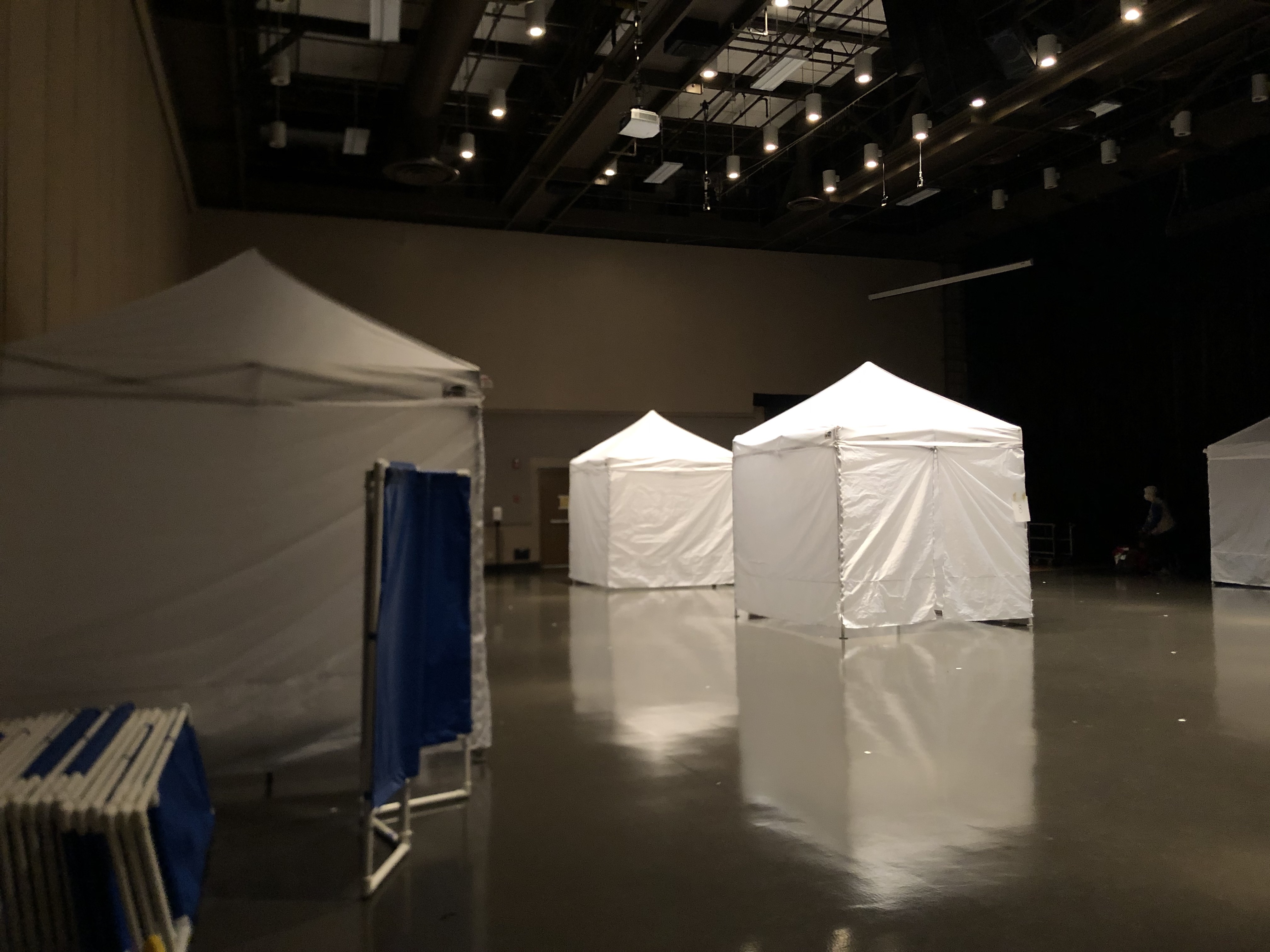
Tents and cots are set up at the city’s evacuation center at Centennial Hall on February 27, 2021. The center is set up for residents in the path of a potential avalanche. (Photo by Jennifer Pemberton / KTOO)

At 10 a.m. Saturday, Juneau’s urban avalanche forecast was for “extreme” danger. That’s a five on a scale that goes to five. The city’s emergency manager, Tom Mattice, said it was the first time he’d ever forecasted an extreme avalanche condition for Juneau.

It was also the first time since 2008 that the city was recommending people in the Behrends Avenue neighborhood evacuate their homes due to the avalanche danger.

The Behrends Avenue avalanche path runs down Mount Juneau on the side facing Gastineau Channel, near Juneau-Douglas High School. It’s obvious where the path is, especially in summer when you can see a distinct lack of trees. At the bottom of the path is three rows of houses.

“I knocked on 39 doors today,” said Tom Mattice from the city’s evacuation center on Saturday night. “Couple of them are on the edge of the avalanche path, but that’s how many I logged.”

He said most people are staying at friends houses or hotels.

“Several people have motor homes or boats or relatives in town,” he said. “We wanted to make sure that people had options.”

So, the city teamed up with the Red Cross and opened up Centennial Hall. There were only a few people registered shortly after it opened at 8 p.m.

One of the ballrooms was set up with about a half dozen white tents, each with a few cots inside so families could stay together and spread out from other groups of people for both privacy and COVID-19 safety.

“We’ve got wool blankets, fleece blankets and pillows in there for folks. There’s a shower house outside,” said Michelle Brown, a Juneau city employee and Red Cross volunteer.

Two officers with Juneau Animal Control were there, too, so that people could bring their pets with them, or even drop them off if they needed to stay somewhere pets weren’t welcome. They had a few cat carriers and some leashes at the ready.

“What we’re offering is holding people’s animals for up to ten days if need be free of charge,” said Jordan Bales. “Also vaccinating and applying treatments that they may need to keep them safe in the shelter.”

Jordan Bales and Diana Moon from Juneau Animal Control are volunteering at the city’s evacuation center at Centennial Hall on February 27, 2021. The center is set up for residents in the path of a potential avalanche. (Photo by Jennifer Pemberton / KTOO)

No pets were at the center at the time, but someone had stopped by to say his cat had run away in the avalanche zone. They filed a lost pet report for him and were hopeful the cat would be found.

As of late Saturday, there have been no slides in the Behrends Avenue Area. But, the weather is about to take a turn for the worse.

“The moisture rate and precipitation rate is going to increase between midnight and 6 a.m. And temperatures are going to warm between midnight and 10a.m.,” Mattice said. “So, during that time we’re going to continue to raise the freezing level and put rain on snow at upper elevations that have seen deep instabilities in the last week.”

The top layer of snow, called the storm slab, was already a meter deep on Friday, he said, and with another foot on top that he thinks Juneau probably got today, that would be enough snow to reach the houses at the bottom of the Behrends Avenue avalanche path. Underneath the storm slab is a deeper “persistent weak layer” of snow from earlier in the year. If that layer slid down the hill with everything on top of it, that avalanche would go all the way past the houses and Glacier Avenue and down to Gastineau Channel.

That persistent weak layer of snow exists throughout the region.

“This year is going to be dangerous and spooky,” Mattice said. “And it may not end until all the snow is gone in the spring.”

Mattice was hoping to get a few hours of sleep tonight before getting up early to check on how much rain or snow fell overnight. He says he’ll update the avalanche advisory at 7 a.m. And by 10 a.m., he’ll hopefully know if it’s safe or not for evacuees to head back home.

Let's block ads! (Why?)


"danger" - Google News
February 28, 2021 at 03:17PM
https://ift.tt/3q3ZaCp

Juneau sets up evacuation center for residents affected by extreme avalanche danger - KTOO
"danger" - Google News
https://ift.tt/3bVUlF0
https://ift.tt/3f9EULr

Avalanche danger high, 32 deaths confirmed this season - The Columbian

tetekrefil.blogspot.com

DENVER — Snowboarder Maurice Kervin glided into the snow along the steep terrain in the Colorado backcountry like he’s done so many times.

There was no warning for what happened next as he glanced over his shoulder: a rush of snow swiftly heading his way.

Caught in an avalanche last month, the 25-year-old deployed his airbag to help stay on the surface of the snow debris and rode out a slide large enough to bury a house. Once he finally — and safely — stopped, Kervin let out a powerful scream.

“Just raw emotion,” he explained. “Happy to be alive.”

This has been an historically dangerous avalanche season, with 32 confirmed fatalities so far, primarily in the West. The accidents have involved different recreational activities — snowboarding, skiing, snowmobiling, hiking.

Avalanche experts are warning the threat of slides in the backcountry may only be growing worse due to a particularly unstable sort of snowpack that’s only seen about once a decade.

“I hope I’m wrong and we’re out of this cluster,” said Simon Trautman, a specialist at the U.S. Forest Service’s National Avalanche Center. “But it won’t be because the conditions are changing. The danger isn’t going away. People’s decisions may change or the number of people in the backcountry may change because of the information but the conditions will not be the driver to get us out of this.”

Snow waiting to crumble

Here’s why the conditions are so unstable in the West, where all but one of the fatalities have occurred: Early fall snow was followed by a long dry period, creating a weak layer of snow. Strong storms in late January covered and preserved this weakness, making the conditions in parts of the backcountry look as enticing as ever — but with unsteady snow just waiting to crumble.

In the time of a pandemic, too, with more recreational enthusiasts having the opportunity or desire to retreat into the backcountry.

Among the deaths this season have been 15 skiers, eight snowmobilers, four snowboarders and four snowshoers/climbers/hikers. There were 15 confirmed fatalities from slides between Jan. 30 and Feb. 7, which experts say was the most in a seven-day period since 1910.

The 10-year average for people killed in avalanches around the U.S. hovers around 26 per season, according to Ethan Greene, the director of the Colorado Avalanche Information Center.

Colorado has reports of 11 killed by avalanches this season, the most of any state. Avalanche experts closely examine the accident reports and study the photos, looking for links to tie all these deadly slides together.

Really, though, they have nothing in common except maybe the unpredictability of the snowpack, which can be affected by windstorms shifting and piling snow atop weak layers and, of course, the ever-changing weather conditions.

Let's block ads! (Why?)


"danger" - Google News
February 28, 2021 at 11:10AM
https://ift.tt/3uEFyIA

Avalanche danger high, 32 deaths confirmed this season - The Columbian
"danger" - Google News
https://ift.tt/3bVUlF0
https://ift.tt/3f9EULr
Saturday, February 27, 2021

Juneau officials recommend residential evacuations, warning of dangerous 'historic avalanches' - Anchorage Daily News

tetekrefil.blogspot.com

Update, 10:25 a.m. Saturday:

Juneau’s urban avalanche forecast describes “extreme” danger Saturday evening with the potential for “historic avalanches” in residential areas.

City officials recommend that residents in the avalanche zone of the Behrends neighborhood in downtown Juneau evacuate their homes.

The city and the Red Cross are opening Centennial Hall as an emergency shelter for anyone who chooses to leave their home. The doors will open at 8 p.m. on Saturday and COVID-19 mitigation measures will be in place.

In the advisory, Emergency Manager Tom Mattice also recommends that all residents avoid avalanche paths including the Flume Trail.

“People need to make their own safety decisions,” he wrote. “But we feel that with the forecast for the next 24 – 48 hours natural avalanches are likely and of great size.”

The City and Borough of Juneau describes the Behrends Avenue avalanche path as the neighborhood directly above the Breakwater Inn, a horseshoe area of houses between Glacier Highway, Behrends Avenue and Ross Way; adjacent to Highland Drive.

Original story, 2:38 p.m. Friday:

Avalanche forecasters are warning of increasing danger in downtown Juneau and the surrounding backcountry, especially if more snow and rain falls on an already unstable snowpack. If conditions worsen, the city would recommend evacuation of downtown neighborhoods.

Juneau city officials said in a release Friday that there is potential for “historic avalanches” in the downtown area through Monday. Depending on temperatures and how much snow falls, the city’s Urban Avalanche Advisory could be raised to “extreme” danger, which is the highest level on the scale.

“I have never forecasted an extreme avalanche condition,” said Tom Mattice, the city’s emergency programs manager.

He is advising downtown residents to be cautious, especially if they live near the Behrends Avenue avalanche path. If residents end up evacuating their homes on the city’s recommendation, a shelter would be set up at Centennial Hall.

Mattice says they’ve recently seen avalanches of snow four to six feet deep throughout the region.

“In the urban environment, if we have a four foot deep avalanche that’s wide enough across the face of the Behrends path, (then) that’s more than enough to hit houses,” he said.

The Alaska Department of Transportation & Public Facilities is warning of increased avalanche hazard along Thane Road. Residents along the road should be prepared for an extended road closure if crews are unable to safely remove any avalanche debris.

Kanaan Bausler of the Coastal Alaska Avalanche Center says they’ve already seen widespread avalanche activity all around Juneau, from Douglas Island down to Snettisham Inlet. And they expect more avalanches over the weekend.

A freezing rain crust has formed on top of recent snow that fell on a weak snow layer. Bausler says the snow’s weakness can be triggered from even a flat spot on the terrain.

“And then, it’ll travel through that freezing rain crust and collapse the looser snow below and the denser snow above,” he said. “So, it can travel great distances and we’ve already seen avalanches that have traveled over a quarter mile just from propagating through the snowpack.”

He says they’re warning people heading out to the backcountry to use extreme caution, even in terrain that is generally considered safe from any avalanches.

He says the unstable snowpack conditions could potentially last through the rest of the season.

Let's block ads! (Why?)


"danger" - Google News
February 28, 2021 at 05:00AM
https://ift.tt/3q1QA7c

Juneau officials recommend residential evacuations, warning of dangerous 'historic avalanches' - Anchorage Daily News
"danger" - Google News
https://ift.tt/3bVUlF0
https://ift.tt/3f9EULr

Seattle Schools says many "essential" staff will be called back to classrooms in March - KUOW News and Information

tetekrefil.blogspot.com

Seattle Public Schools informed hundreds of teachers and other school staff that they may be among those called back to buildings beginning March 8th to teach in-person - before the district reaches a reopening agreement with Seattle Education Association.

In a controversial move, the school board voted Thursday to classify as “essential” staff members who serve some of the highest-needs students with disabilities, as well as those in the district’s preschool and Head Start programs.

This would not apply to general education kindergarten or first grade teachers, who the district has said would return to classrooms this spring. The only dissenting vote came from Board Director Brandon Hersey, who is a teacher in another district.

The Seattle Education Association responded swiftly and with anger. SEA said this move violates its memorandum of understanding with the district because it would change staff working conditions, and that the district has not yet satisfied union concerns regarding health and safety precautions to prevent coronavirus transmission.

“There is nothing the district could do more to undermine the process and to cause irreparable harm to negotiations than take this bad-faith approach,” SEA President Jennifer Matter told district leaders and the school board in a sharply-worded letter.

In taking the aggressive step, the district exercised a clause in its MOU with the union that allows it to deem certain staff as responsible for “essential” work “that is required to maintain basic operations of the district, or on-site work critical to meet an essential student or business need.”

Superintendent Denise Juneau, in a written statement, said “Working with our partner union, SEA, will continue, but because we haven’t reached an agreement yet, we have to begin to take the steps to bring educators back for our students.”

“I applaud the board’s courageous action to designate as essential these instructional services,” Juneau said.

Along with pressure from many parents to reopen, the district is under federal investigation for its failure to provide many students their legally-entitled special education services during the pandemic.

The state Office of Superintendent of Public Instruction also set a March 1st deadline for districts to submit their reopening plans in order to guarantee access to federal Elementary and Secondary School Emergency Relief funds. Seattle stands to receive $41 million.

Anthony Fauci, the nation’s leading expert on infectious disease, President Joe Biden, and Washington state Governor Jay Inslee have all stressed that schools can and should reopen as soon as possible, and that risks are low if carefully mitigated by measures like universal mask-wearing and social distancing.

Seattle, the state’s largest district, is also one of the last districts in the state to return to in-person learning at any significant scale. The latest negotiations over how and when to expand in-person learning began in January, with union concerns hinging primarily on whether the district has put in place sufficient health and safety precautions, including increased ventilation in classrooms and PPE for staff.

Most school staff are not currently eligible for Covid vaccination, because Washington gave lower priority to educators than many other states. School staff age 50 and older will be eligible in the next vaccine phase, but younger staff members are several phases away from vaccine eligibility.

Neither does receiving an “essential” designation by the district give staff automatic Covid vaccination priority.

The union holds that the memorandum of understanding allows the district to assign special education staff to work with students one-on-one, and only after an evaluation process to determine that in-person services are critical for the student to make educational progress. Currently, 148 students are receiving in-person special education services in the district -- fewer than 2 percent of all special education students.

The district’s plan would remove that evaluation hurdle for some special education students, and require staff to work in classes of as many as 15 students, up to five days a week.

“The ‘essential’ task provision of the memorandum of understanding was never intended to allow the Superintendent to unilaterally impose new working conditions without negotiation, as clearly outlined in the current MOU,” SEA leaders wrote in an email to members and the district community.

Union leaders called the district’s move a “union-busting tactic” and said it is considering filing an unfair labor practice charge.

The district's position, said Concie Pedroza, the district’s chief of student supports services, is that the "essential" designation for staff enables the district to assign them work it considers critical.

Pedroza pointed to other staff the district has classified as “essential,” including staff in the admissions office back in September, “as we were learning that bilingual families were really struggling with access to remote.” Nutrition, custodial, and payroll staff have also been deemed “essential,” Pedroza said, and are working in-person.

The district’s move drew harsh criticism from many union members, including many who were notified Friday that they may be required to return to buildings in just over a week. The district estimated about 350 staff will be deemed “essential” to serve an estimated 600 special education students whose parents have indicated they are interested in returning. Many preschool staff members and students would also return.

“It’s extremely alarming," said a developmental preschool instructional assistant who asked not to be named for fear of retaliation.

“Employees in intensive pathways cannot do their jobs without being very close to their students... for long periods of time, holding hands to guide them, toileting them, helping them eat, and helping them learn through significant hand-over-hand instruction,” she said.

Although students learning in-person will be required to wear masks if possible, some students with disabilities will be allowed to go maskless if they do not tolerate them or cannot safely wear them, Pedroza said. Staff slated to return to buildings said they anticipate many of the students they serve will not be masked for that reason.

Despite that, Lisa Reibin Evans, a paraeducator who has worked one-on-one with preschool students at North Beach Elementary School since January, said she’s been waiting for a month to receive KN95 masks the district promised. Eventually, she said, she got some from a colleague.

“The district is not ready. This is not going to work,” Reibin Evans said. Her PPE box is understocked, she said. “I had to go into the cafeteria the other day to get gloves."

Reibin Evans said she does not trust that the district can successfully scale up services and protect students and staff if it cannot do so for the four dozen or so staff members she estimates are already serving students in-person.

The district insists that it is ready. “SPS has prepared school buildings for the return of in-person instruction, with all necessary safety equipment, ventilation upgrades, social distancing, transportation, and meal services,” the district said in a written statement.

Janis White, president of Seattle Special Education PTSA, called the whole situation “tragic.”

“We’re coming up on one year of being remote, and so many families are truly in crisis at this point,” White said. “Their students with disabilities are not capable of learning through the remote learning process.”

Still, White said, she finds disconcerting word from some staff currently serving students in buildings that they have not had the PPE they need and that communications about safety measures were inadequate. She worries that the district’s move to reopen schools before an agreement is reached with the union could do more harm than good.

“It does seem to me that everybody is going to be better served if there's a collaborative process, with transparency, and that there's an agreement before students go back,” White said.

“My fear with all of what's happening now is that it's going to turn into a distraction, potentially, and delay getting services to kids who desperately need them.”

The district said its next step will be determining which eligible families want to return and assigning staff accordingly. Students will begin returning in phases March 11th following three days of staff in-person training, the district said, beginning with children in preschool and Head Start and some elementary students who receive special education services.

The district has not yet announced return dates for other special education students in intensive pathways. And it has yet to agree with the union on a reopening plan for any other students in grades K-12.

Let's block ads! (Why?)


"many" - Google News
February 28, 2021 at 08:31AM
https://ift.tt/3bRpsmu

Seattle Schools says many "essential" staff will be called back to classrooms in March - KUOW News and Information
"many" - Google News
https://ift.tt/2OYUfnl
https://ift.tt/3f9EULr