Gene Connell, a SEPTA worker who supplies bus mechanics with equipment, erected a plastic barrier around the storeroom where he works to protect him from the coronavirus.
But his manager told him to take it down, Connell told NBC10 Investigators.
The SEPTA employee was one of 1,000s to file a COVID-19-related complaint, whether it was to managers where they work or by citizens with the City of Philadelphia's 311 system between July and December last year, according to a review by the NBC10 Investigators.
"The six feet of social distancing wasn’t being enforced. The mask wearing wasn’t being enforced," Connell said in an interview. He filed his complaint directly to SEPTA. "I'm not the Covid police, but who is? Who’s going to step in and enforce these policies so we can all go home to our families safely."
SEPTA Deputy General Manager Scott Bauer said it's his job to make sure all transit agency employees are following the rules.
"You’ll always find people who push it – who skirt the rules on all sides. Not just employees but managers too," he said. "My job when I see those things is to correct them and I do."
Nearly 2,000 complaints came into Philadelphia's 311 system, which for years has been the place to send complaints and concerns in the city, that were related to the coronavirus. Many of them came from within the very buildings that house city workers.
Many other complaints involved SEPTA riders and employees.
The 311 system was set up to take concerns and issues from citizens and funnel those complaints to the correct city department that handles whatever type of issue is brought up in a 311 complaint.
From sanitation workers to emergency dispatchers, city workers shared grievances with their workplace situations during the pandemic.
Some of the complaints logged, according to the review by NBC10 Investigators include:
Sanitation staff at the department's headquarters for "not wearing masks.”
Employees at the city's Municipal Building across from the City Hall complaining of “positive cases” and that "the building is not properly cleaned and is always without soap.”
Employees at the city District Attorney's Office claiming there is “no regular cleaning or wiping down of high touch areas"; "no hand sanitizer for the general public"; and "ventilation is nonexistent in the waiting room."
Deputy Mayor Rich Lazor said the city has paid $4.3 million for COVID-19-related cleaning and PPE in city buildings, and that he responds immediately to any concerns brought to his office's attention.
"If there’s an issue that pops up, someone doesn’t have proper PPE or something's an issue, we jump on it quickly," Lazor said.
"many" - Google News
March 03, 2021 at 07:56AM
https://ift.tt/384EJ22
Many City and SEPTA Workers' Have Filed Coronavirus-Related Job Complaints - NBC 10 Philadelphia
"many" - Google News
https://ift.tt/2OYUfnl
https://ift.tt/3f9EULr
NEW YORK -- U.S. senators overseeing the nation's military on Tuesday raised concerns over Washington's preparedness in the event of an invasion of Taiwan by mainland China as the scenario emerges as one of the largest flashpoints in the Asia-Pacific.
Answering questions from Senate Armed Services Committee members over a potential military conflict there, former national security adviser H.R. McMaster warned that the period of greatest danger for Taiwan is from 2022 onward, after the Beijing Winter Olympics and the Chinese Communist Party's twice-a-decade national congress.
"Taiwan is the next big prize" for China and is "the most significant flashpoint" that could lead to a large-scale war, said McMaster, now a senior fellow at Stanford University's Hoover Institution, in a hearing before the committee.
Chinese President Xi Jinping believes that "he has a fleeting window of opportunity that's closing, and he wants to in his view, make China whole again," said retired lieutenant general, who served as national security adviser in the Trump administration from 2017 to 2018, citing Beijing's crackdowns in Hong Kong and Xinjiang.
China says the U.S. should stop interfering in its internal affairs in these territories, a point reiterated just last week by Foreign Minister Wang Yi.
A severe crisis between China and the U.S. over Taiwan rose to a top-tier conflict for the first time this year in the Council on Foreign Relations' annual Preventive Priorities Survey, published in January. It was the No. 2 danger to U.S. interests in the region, just after North Korea's development of nuclear weapons, according to the report, which was compiled after polling American foreign policy experts.
Questions over how the U.S. should approach Taiwan at Tuesday's hearing, titled "Global Security Challenges and Strategy," came from both sides of the aisle.
Republican Sen. Tom Cotton noted that a move on Taiwan by Beijing would have implications for the great power competition in advanced technologies. "If China were able to invade and annex Taiwan, it would also put in Chinese hands the world's leading producer of semiconductor chips as well," said Cotton.
Taiwan is the world's largest producer of semiconductors, accounting for 22% of global output according to the Boston Consulting Group.
Asked whether Washington should embrace so-called strategic clarity toward Taiwan to explicitly pledge to the island's defense should China invade it, in place of its longtime policy of strategic ambiguity, McMaster called the current policy "adequate, especially after we've made public the six assurances" to Taiwan.
Thomas Wright, a Brookings Institution foreign policy expert who also spoke at the hearing, shares this view.
"I wouldn't revisit" the concept of strategic ambiguity, Wright said, adding that it is through actions that the U.S. demonstrates its commitment to Taiwan and deters Beijing.
Both the Trump administration and the Biden administration have acted to assure Taiwan and send a clear message to China, McMaster said.
The key to preventing a scenario of Sino-American armed conflict is to help Taiwan "harden its defenses to make itself indigestible" before the period of "greatest danger" from 2022 onward, he said. It is important to keep forward-position-capable joint forces in the region, McMaster said, "because what China's trying to do is to create in the South China Sea a barrier that would make it just far too costly for us to come to any ally's defense."
At Sunday’s ceremony, a whole host of British winners and nominees got their training in the theater before they made it to the screen.
LONDON — Where would this year’s Golden Globes be without the English stage? Greatly diminished. As the winners John Boyega and Daniel Kaluuya (who took home trophies for best supporting actor in a television and movie role, respectively) and nominees like Olivia Colman and Carey Mulligan evidence, a pipeline of talent runs directly from London theater to onscreen renown at the highest levels in Hollywood.
Many of the other British winners at Sunday night’s ceremony also got their training onstage. Although we may now know Emma Corrin as the latest person bold enough to embody Princess Diana, Sunday night’s 25-year-old winner for actress in a drama series accrued plenty of dramatic credits while studying at Cambridge. Her “Crown” co-star and fellow winner Josh O’Connor graduated from the Bristol Old Vic Theater School before shifting his attention to the screen. He was expecting to make a high-profile return to the London stage last year in a National Theater production of “Romeo and Juliet.” Because of the pandemic, the production has been reimagined for the screen with a notably starry supporting cast, and will be airing in Britain and the United States next month.
Josh O’Connor, who plays Prince Charles in “The Crown,” graduated from the Bristol Old Vic Theater School.Alex Bailey/Netflix, via Associated Press
Emma Corrin, who plays Princess Diana, accrued dramatic credits while studying at Cambridge.Des Willie/Netflix, via Associated Press
Michaela Coel’s absence may have commandeered attention at this year’s Globes after her HBO show “I May Destroy You” was snubbed by the Hollywood Foreign Press Association, but keen-eyed London playgoers will have spotted this graduate of Guildhall School at the National Theater’s now-defunct Shed theater, first in the all-female ensemble of “Blurred Lines” and then in her self-penned monologue, “Chewing Gum Dreams,” a project she began while still a student. That title was shortened and the work’s concept expanded to create “Chewing Gum,” Coel’s first TV show. Her fiery talent, first seen in embryo by London theater audiences, has now found the larger audience it deserves.
On occasion, a small play itself becomes a celluloid sensation. There’s no other way to describe the leap made by “Fleabag,” which premiered at the Edinburgh Festival Fringe in 2013 and which I caught within the intimate confines of the Soho Theater in London the following year. Before long, its creator and star, Phoebe Waller-Bridge, had found a new and welcoming home for her sexually unbridled Londoner on television.
An astonishing success story followed, and when Waller-Bridge returned with her character to a mainstream West End perch in 2019, there were House Full signs from its first performance onward. Before long the show’s second season had also won six Emmys, as well as a best actress Golden Globe for its creator. As a sign of quite how high her Tinseltown star has risen, Waller-Bridge was brought on with much fanfare to work on the script of the upcoming Bond film “No Time to Die.”
Phoebe Waller-Bridge received a Golden Globe award in 2020 for her work on “Fleabag.”Paul Drinkwater/NBC, via Associated Press
Indeed, scratch most British TV and film names and you’ll find a theater-trained talent, most of whom are happy to return to the stage and regularly do: Ralph Fiennes, a movie star by anyone’s definition, was quick to brave the London stage last year during the brief mid-pandemic window when theaters here were open. His chosen vehicle was David Hare’s solo play, “Beat the Devil,” appearing as the playwright himself.
Fiennes graduated, as have many well-known actors here, from the prestigious Royal Academy of Dramatic Art. The widely shared belief, at least in Britain, is that some sort of stage training sets you up for a profession that demands versatility and flexibility (not to mention technique), all of which are surely useful onscreen as well as onstage. Nor can one deny that theater training here has long seemed like a rite of passage, conferring legitimacy on those who submit to the rigors of the stage.
Not everyone follows this path: I’ve yet to see yet another of Sunday’s Globe recipients, Sacha Baron Cohen, on a London stage, though that prospect is hugely enticing, and such actors as Hugh Grant and Kate Winslet seem to have leapt to onscreen stardom without paying this country’s seemingly obligatory dues onstage. (Winslet has done theater in the regions but not in London.)
Part of the fun of being a theater critic here is charting an actor’s journey from local favorite to global star. This trajectory sometimes happens later in life: Ian McKellen and Judi Dench were known to London theater devotees well before their screen work in such franchises as “The Lord of the Rings,” “X-Men” and the Bond films gained them worldwide attention.
Years before Daniel Kaluuya starred in “Judas and the Black Messiah,” he was onstage at the Royal Court Theater.Glen Wilson/Warner Bros., via Associated Press
But such is the accelerated nature of fame nowadays that English theater actors often get catapulted to Hollywood in their 20s and 30s. Kaluuya was onstage at the Royal Court here in Roy Williams’s pugilistic drama “Sucker Punch” in 2010; since then, Kaluuya has received an Oscar nomination for “Get Out” and would seem a likely candidate for a second nomination this year on the back of his recent Globe win for playing the Black Panther leader Fred Hampton in “Judas and the Black Messiah.” And though Boyega had already been seen in “Star Wars: The Force Awakens” by that point, his 2017 appearance on the Old Vic stage as the rattled soldier at the stricken heart of Georg Büchner’s classic drama “Woyzeck” reminded audiences that this alumnus of south London’s Theater Peckham had in no way forgotten his roots.
It makes me smile to think back on certain productions and what has happened to the actors since. Who at the 2004 London premiere of Edward Albee’s harrowing “The Goat, or Who is Sylvia?” would have guessed that an emotionally vibrant young actor in the cast named Eddie Redmayne would scoop up Golden Globe and Oscar trophies just over a decade later for playing Stephen Hawking in “The Theory of Everything”? And Colman seems to get nominations (and sometimes trophies) for pretty much everything she stars in these days — “The Night Manager” and “The Favourite,” through to “The Crown” and her current screen turn as Anthony Hopkins’s daughter in “The Father” — but it was only in 2012 that both she and Waller-Bridge had supporting roles in a fizzy West End revival of “Hay Fever,” Noël Coward’s comedy.
Might the pandemic imperil this stage-screen symbiosis? Not for too long, especially if theater here is reignited from May onward, as is the hope. It will help, too, if talents of the magnitude of Fiennes are brought swiftly into view.
It’s not just English TV and film actors who connect umbilically to this country’s theater, but offscreen talent, too. The writer Peter Morgan had a big West End and Broadway hit with “The Audience,” his play about Queen Elizabeth II’s weekly meetings with the prime minister, before finding colossal success with Netflix’s “The Crown” (though, to be fair, he had embraced the royal family some years before “The Audience” in the 2006 movie “The Queen”). Emerald Fennell, a Globe nominee for directing Mulligan’s star turn in “Promising Young Woman,” will be represented on the West End before long as book writer of the new Andrew Lloyd Webber musical, “Cinderella.” Those ventures might seem like entirely separate worlds, but the adaptability of English talent would suggest not.
For now, I would advise keeping an eye on the entire cast when we are allowed back into a playhouse. You never know where standout theater talent may turn up next, but Londoners can at least exult in the gratification that comes from having seen them live and first.
Luxury electric vehicle maker Lucid Motors has attracted a lot of interest from investors recently. The company recently announced plans to go public through a reverse merger with Churchill Capital Corp IV(NYSE:CCIV), a special purpose acquisition company (SPAC). You can read a full breakdown of Lucid Motors stock over at Millennial Money, but I'm going to talk here about how many vehicles it plans to manufacture this year, and how long it could take to ramp up to full production.
Image source: Lucid Motors.
There's no shortcut for building cars
Lucid Motors finished the first phase of its 999,000-square-foot Casa Grande, Arizona, factory in December, and management says that it will start production of the fully electric Lucid Air by this spring. So how many of the vehicles will it make this year? About 7,000 at the most.
While the company says the Arizona facility already has the capacity to produce 30,000 vehicles per year, investors should remember that building cars, particularly during the early stages of production, is very difficult. Let's not forget that Tesla CEO Elon Musk described his company as being in "production hell" when it was in the early months of manufacturing its Model 3 in 2017 -- and that period occurred after Tesla had about 10 years of vehicle production experience under its belt.
If a company like Tesla suffered through ramp-up problems on a new model even after it had built several vehicles, you can bet that Lucid Motors will have some growing pains in the first year (or more) of production of its first model.
Lucid says that it will continue expanding its Arizona factory, increasing its square footage to 5.1 million by 2028, and will eventually reach an annual capacity of 365,000 vehicles. But that will take time. Keep in mind that Tesla just had its first year with 500,000 vehicle deliveries in 2020.
How Lucid plans to avoid "production hell"
Lucid's execs have made several comments indicating that they plan to do things a little bit differently than Tesla, in ways they hope will allow them to avoid some of their competitors' mistakes. One aspect of that plan is their strategy of limiting Lucid's factory capacity to only what it needs right now.
Peter Hochholdinger, Lucid's vice president of manufacturing and a former Tesla employee, told Axios in January, "Production hell means you didn't plan very well." Ouch.
Now, those are some bold words from a company that has yet to sell a single commercial vehicle yet, but it shows that Lucid really wants to get its vehicle production right. By intentionally starting with limited vehicle production in 2021 and not building a huge factory upfront, the company thinks it can be more efficient and avoid some pitfalls that tripped up Tesla as it raced to boost its output.
Over the next two years, Lucid will work on expanding its Arizona facility while also gearing up for its next vehicle, the Gravity SUV. When the next phase of the factory expansion is completed, Lucid says it will be able to produce 90,000 vehicles per year.
An electric vehicle company worth watching
While Lucid Motors is still at the beginning stages of manufacturing its first vehicle, investors will likely want to keep tabs on it. Electric vehicles are becoming increasingly important to both Wall Street and the automotive market. That will likely make Lucid Motors a hot commodity as the EV market expands in the coming years.
This article represents the opinion of the writer, who may disagree with the “official” recommendation position of a Motley Fool premium advisory service. We’re motley! Questioning an investing thesis -- even one of our own -- helps us all think critically about investing and make decisions that help us become smarter, happier, and richer.
States around the country are reporting a significant decline in the number of students enrolled in public school because of the coronavirus pandemic, leaving experts and educators concerned about the trend, and its potential long-term consequences.
A notable number of students seem to have simply fallen off the grid, not showing up for online or in-person instruction, their whereabouts unknown by school officials.
Given the chaos caused by the pandemic, and the lack of data, it is difficult to truly determine the exact magnitude of the problem, which seems to be disproportionately affecting already vulnerable student populations – among them homeless students, children with disabilities, children of immigrants, children in foster care and children of color.
A recent study by Bellwether Education Partners, a non-profit that focuses on underserved communities, estimates that approximately 3 million of the “most educationally marginalized students in the country” may have been missing from school since March 2020, when the pandemic forced school closures. The group said it arrived at the number by calculating a “likely percentage of at-risk groups not in school, based on media reports and available data.”
ABC News contacted officials from the departments of education in all 50 states, and found that the problem appears to be nationwide.
Although some states reported that they do not track such information, many others said that they have seen a significant decline in their enrollment numbers, and still others have reported they have thousands of missing students.
Thousands 'missing'
In Michigan, K-12 enrollment decreased this fall by some 53,000 students out of about 1.5 million students. In a December op-ed, state Superintendent Michael Rice said much of the drop was due to factors such as an annual decline in enrollment for the past 10 years, parents opting to hold their children back from kindergarten and an increase in the number of home-schooled students, ultimately accounting for approximately 40,000 of those students.
However, he said, “of significant concern” are the approximately 13,000 students fully unaccounted for.
“The granular work to find children must take place at the local level,” Rice wrote. “Every child is important. To lose even one is too many.”
In Dallas, Texas, which was home to approximately 153,000 students last year, there are about 9,000 high-schoolers, 2,000 middle-schoolers, and 1,000 elementary school students unaccounted for, Robyn Harris, a representative from the Dallas Independent School District, told ABC News.
And in Florida, officials are trying to determine the whereabouts of nearly 88,000 students who were expected for the 2020-'21 academic year and failed to show up in the fall. Last year, state enrollment topped 2.8 million, but that number has since dipped to 2.7 million.
In a Feb. 11 letter to school district leaders, Florida House Speaker Chris Sprowls called this drop "alarming,” stating that the number represents over 3% of the state’s total student population. Posting his letter on Twitter, Sprowls urged districts to use every available resource “to locate these missing children. We have a moral obligation not to allow any of these children to slip through the cracks of the system.”
Miami-Dade County, which is home to the nation's fourth largest school system, with nearly 335,000 students, the district opened this year with over 10,000 fewer students than in 2019, Superintendent Alberto Carvalho told ABC News.
After multiple steps were deployed to find these students, the majority were located. However, the district says there are still about 1,000 students who are deemed “truly missing,” which Carvalho calls “deeply troubling.”
“We believe that these were the students who were in crisis prior to the COVID-19 crisis. These were probably poor students, probably English language learners, learners who may have had a disability, may have had home insecurity, food insecurity and may have had a fragile immigration status,” Carvalho said.
Miami-Dade school officials are continuing to look for these students, while also dealing with over 13,000 families whose children chose remote learning, but seem to be “severely regressing” or disengaged from school.
Why are children missing?
Nationwide, in many public school districts, kindergarten enrollment is down. Although kindergarten is not a requirement in any of the following states, Minneapolis saw a 16% decline, Los Angeles had a 14% drop, and Colorado experience a 9% decline in their yearly kindergarten enrollment.
Many students also do not have access to essential technological resources, such as Wi-Fi, or computers, in order to participate in remote learning.
A digital equity report by the National Education Association (NEA) found that an estimated 25% of school-age children do not have broadband access or a web-enabled device such as a computer or tablet.
From the onset of the pandemic, there were about 17 million students who were not adequately connected to the internet, said Mike Magee, CEO of Chiefs for Change, a nonprofit, bipartisan network of state and district education leaders from across the country.
“From a learning standpoint, that was potentially catastrophic,” Magee explained. “What we've learned, over the course of the last 12 months, is that from both a learning and a health perspective, there are millions of students for whom virtual learning just is not working.” In addition, he said, “there's a subset of those students who are completely detached from their school systems at the moment.”
“They have logged off. They don't feel connected enough to their own learning to log on every day," he added.
According to the NEA’s report, most of the children lacking appropriate technology are from low-income and minority families, with “this inequality is systematically related to the historical divisions of race, socioeconomic status, and geography.”
Another major issue affecting education for low-income families is the economy. Millions of low-income families have felt the brunt of the economic downturn, with many suddenly confronted with unemployment and housing insecurity, causing these children to be more at risk of missing school.
“Many of our students live in multi-generational families, where mom, grandma, aunts, uncles all live in the same space. And many of them have experienced COVID in a real way where, unfortunately, death has taken a toll on their family. Some of them are not comfortable with the face-to-face piece. They're just trying to maintain the day-to-day survival,” Harris explained.
Further, with job or wage losses in the country persisting amid the coronavirus, some of these teenagers are opting to work, rather than return to school, in order to help their families make ends meet or caring for younger siblings while their parents work.
“Right now, it's not at the forefront of their mind to be on top of their schooling, because it's about really making sure that their family unit is maintained,” said Harris.
Absenteeism
The pandemic has also led to a dramatic surge in the number of students absent on a typical school day, regardless of whether remote learning is in place or not.
Chronic absence, which is defined by the U.S. Department of Education as missing at least 15 days of school, has increased substantially, particularly among vulnerable populations, and students of color, according to Hedy Chang, who directs Attendance Works, an initiative targeting chronic absenteeism.
In some districts, student absences have doubled during the beginning of the pandemic.
“In Connecticut, for example, chronic absence has risen from 12% in the 2019-20 school year, to 21% in the first half of the 2020-21 year. For English-learners, the rate has doubled from 17 to 35%; and for students eligible for free meals, it’s up from about 20 to 35%,” Cheng said.
What schools are doing
Around the country, teachers and school officials are doing their best to connect with students who are missing or are chronically absent.
Dr. Chad Gestson, superintendent of the Phoenix Union High School District, and a member of Chiefs for Change, has created a program to contact every student, every day by having adults placing a phone call to the over 30,000 students in Phoenix to check on how they are doing.
Similarly, in Dallas, "Operation Comeback" campaign is seeking to recapture the missing students. Teachers and volunteers have been reaching out to students, said Harris, with postcards or emails, asking them “where are you, we miss you come back. There's still time.”
Door-to-door home visits began earlier this month but were cut short following the frigid winter weather that hit Texas last month.
Miami-Dade, in Florida, is using a “multi-tiered approach, using all of our resources collectively to be able to reach these families,” Carvalho told ABC News, such as door-to-door visits by school officials, in collaboration with police officers, social workers and county entities, tracking students in subsidized housing through the county’s housing authority.
The district is working with community-based organizations to reach out, in particular, to migrant communities, while conveying information through mass media and social media.
Officials want to “sensitize our community to the plight of these families,” said Carvalho, including reaching out to the friends of the missing students to see if they knew where they were. “So it is an all hands on deck approach to determine where the students are.”
The ‘catastrophic’ consequences of learning loss
The long-term consequences for these “missing” students “are catastrophic,” experts say.
“You are going to have a whole generation of kids who are not well enough prepared for college and careers. You are going to have significant increases in mental, social and emotional well-being issues with kids,” Magee said.
It can also be difficult for a student who has left school for a while to reenter the educational system and adapt.
However, there is hope, as “interrupted schooling is a challenge that can be addressed,” Chang said.
Students are resilient, and if provided with adequate academic and social supports, and offered “engaging, supportive and powerful educational experiences that offer pathways to a better future,” they will be able to make-up for lost learning opportunities due to the pandemic, she added.
“We need to appropriate the necessary resources to bring these students up to the standard that is equivalent to their age, at this point, as quickly as possible,” Carvalho concurs, or America as a whole will lose its position on the world stage.
"many" - Google News
March 02, 2021 at 06:15PM
https://ift.tt/3bRe89H
Thousands of students reported 'missing' from school systems nationwide amid COVID-19 pandemic - ABC News
"many" - Google News
https://ift.tt/2OYUfnl
https://ift.tt/3f9EULr
Of all Pennsylvanians vaccinated against COVID-19, only 2 percent are Black.
"There is fear, hesitation," said Calvin Riddick. "At first I was like, 'no I'm not taking it, I'm not gonna do it.'"
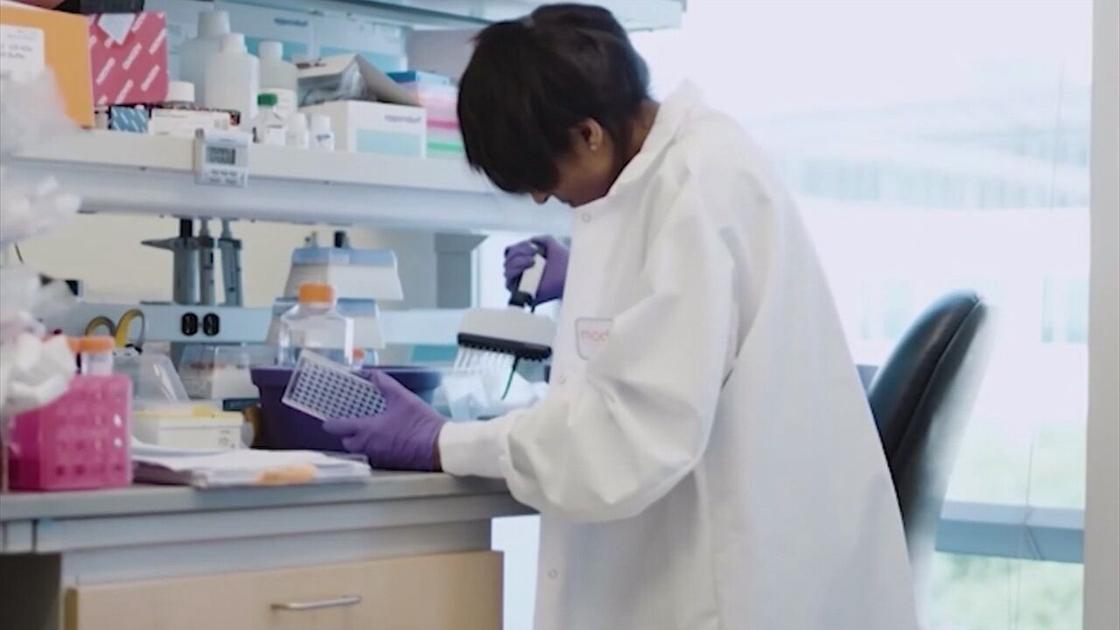
Ultimately, Riddick got vaccinated, but that came after lots of research and education about the vaccine's safety and efficacy, and learning that a Black woman was behind the Moderna vaccine.
"That put my mind at ease," Riddick said.
His hesitation deserves historical context.
"It's what has been served to us on a plate down through the generations, we can't trust the white man because of their past history," said Esther Lee, president of the Bethlehem chapter of the NAACP. "The Tuskegee issue comes up mostly."
The Tuskegee Project started in 1932 and lasted 40 years.
Nearly 600 Black men were studied to see what happened when syphilis went untreated within the Black community. Participants were compensated with meals and exams, but those who had the disease weren't told about their diagnosis and were unaware they weren't being treated, even when treatments were available.
A class action lawsuit was filed on the matter in the 70s, and in the late 90s President Clinton apologized on the nation's behalf.
"It's enough to deter people of color from getting the vaccine," Lee said.
Lee says barriers, including access to technology and proximity to clinics, are other factors.
She's also vaccinated, and like Riddick believes education is key in inoculating more African Americans.
"If they're more informed I believe they would get the vaccination," Riddick said.
Dr. Harold Kreithen is chairman of the Allentown NAACP Medical Committee. He's organized a Zoom seminar for later this month.
"To try to reach out to the African American community in particular to give them factual information about the vaccination program," Kreithen said.