TUCSON - Warm and windy today with gusts up to 40 mph and with the dry air in place, a Red Flag Warning will go into effect from 11 AM to 6 PM! Any fire that starts will spread rapidly so please remember that one less spark means one less wildfire!
A system passing through today into tomorrow will bring very windy conditions, cooler temperatures and limited moisture! Gusts as high as 40 mph will be possible and with the dry air in place, a Red Flag Warning will go into effect from 11 AM to 6 PM tonight. The warning includes most of Pima, Pinal, and Santa Cruz County as well as Western Cochise County.
Any fire that starts will spread rapidly! Remember one less spark, means one less wildfire! Blowing dust will also be possible, especially from Tucson to the west.
The best chance for showers will be to the north of Tucson. Rainfall amounts will be light with trace amounts to 0.10" possible. Highs will drop into the upper 60s Thursday, which is slightly below average, before warming back up into the 80s Friday through the weekend.
Today: Windy and warm! High: 81°
Tonight: Few clouds, cold. Low: 46°
Tomorrow: Cool and mostly sunny! High: 67°
Sign up for daily news and weather emails by clicking here!
Hooked: Food, Free Will, and How the Food Giants Exploit Our Addictions, by Michael Moss Random House
Random House
Around the corner from where I live in small-town Virginia is a Kroger's grocery store. According to its website, the store sells 20 flavors of Lay's potato chips: classic, wavy, wavy ranch, baked, barbecue, sour cream and onion, salt and vinegar, lightly salted, cheddar and sour cream, limon-flavored, honey barbecue, sweet southern heat, dill pickle, flamin' hot, flamin' hot and dill pickle, cheddar jalapeno, jalapeno ranch, lime and jalapeno, kettle-cooked, and kettle-cooked mesquite barbecue.
In Hooked: Food, Free Will, and How the Food Giants Exploit Our Addictions, investigative reporter Michael Moss explains why a major food corporation — Lay's is owned by PepsiCo — would produce such an over-the-top number of versions of potato chips. We are prone to what food scientists called sensory-specific satiety, feeling full when we take in a lot of the same taste, smell, or flavor. Changing a food item even just a little, from barbecue to honey barbecue, let's say, makes for novelty that lights up our brain.
Eons ago in prehistory, our ancestors survived more readily when they selected varied foods, with varied nutrients, as they gathered or hunted. That evolved tendency "makes it difficult for us to say no when we're presented with food that's even just slightly different from what we just ate," as Moss writes.
Moss explores, through the lens of addiction, the relentless striving of Big Food corporations to hook us on highly processed foods. These are foods loaded with sugar, salt, fat, and preservatives. (Moss' book Salt Sugar Fat: How the Food Giants Hooked Us was published in 2013.)
Addiction is a spectrum, Moss says. Not every person with substance abuse disorder experiences tolerance — which is the need for more and more of the substance to feel its effects — or intense withdrawal symptoms. Some people, scientists have learned, are affected only mildly. The early part of the book is helpful for reframing addiction in this way but, even so, does it make sense to talk about addiction to processed foods as one would about addition to tobacco or heroin?
Moss says yes.
Repetitive behavior that's difficult to quit and that causes harm — the most accurate definition of addiction — accurately describes what many of us experience when it comes to highly processed foods. In the U.S., the turn towards overeating these foods occurred in the early 1980s, and the subsequent rise in conditions like hypertension, heart disease, cancer and diabetes is linked to it.
A theme for Moss is that the food giant companies consciously exploit our evolved biology, as I mentioned in the example about the potato chips and sensory-specific satiety. Consider the route that different foods take to excite the brain. With tobacco and drugs, the substance must enter the bloodstream in order to reach the brain. But this isn't the case for a bite of chocolate cake or cheese pizza. The sugar in the cake goes from the taste buds to the brain directly, and the fat zips there through the trigeminal nerve — in both instances incredibly fast. Experiments show that "the faster something reaches the brain, the greater the brain's response," Moss writes. Foods that contain both sugar and fat produce a double hit to the brain and thus a double arousal, and food companies know this.
The Big Food companies, Moss explains, are all about publicity and profit even when the dangers to consumers' health is evident. In 2010, First Lady Michelle Obama called out the food giants for all the substances they add to foods that harm children's health and contribute to kids' obesity. In response, manufacturers like Coca-Cola, Kellogg's, Kraft and PepsiCo, through the Healthy Weight Commitment Foundation they had established the previous year, promised to cut calories from their products.
In fact, this consortium of companies exceeded their initial goal and reached a reduction of 6.4 trillion calories by 2012. A scientific review, however, showed that this reduction works out to a savings of only 78 calories per day per person, Moss notes. And of course it can't be known how many consumers really did eat less as a result of this project. Much of the calorie reduction, it turns out, came from smaller package or portion sizes. Unfortunately, "the biggest reduction, more than 14 percent of the industry's 6.4 trillion calories, came from lower sales of fresh and frozen vegetables," Moss writes.
Occasionally, Moss runs into trouble when reporting beyond the realm of food science. He is fascinated with one species in the human lineage called Ardi, short for Ardipithecus ramidus, discovered by paleoanthropologists in Ethiopia in 1994 and dated to around 4.4 million years ago. Moss describes Ardi as the first biped, or species in our lineage to walk upright (which is not fully clear). His focus on a single species and its physiology as related to food-getting behavior offers a strangely limited picture of our past. Worse, when he refers to Ardi's "decision to stand up and walk upright," he misleads readers about how evolution works. It's not as if Ardi and her kind discussed the matter and made a conscious choice for bipedalism.
Overall, though, Hooked is smoothly written, with just the right amount of fascinating scientific detail. Moss describes ingenious experiments where people enter brain scanners with squares of chocolate already in their mouth, so that researchers can assess effects on the brain as the sweet treat melts on the tongue. He recounts food experiments with animals, that he calls "poignant" (and I'd call "inhumane") such as when rats are crammed full of sugar-laden foods or forced to endure tubes invading their bodies.
The big food corporations go to "great lengths to maintain the belief that our disordered eating is on us, through our lack of self-control," Moss writes. Convincingly, Moss points the finger right back at the corporate manipulation and deception that's meant to amp up our addiction to processed foods. I won't be buying potato chips anytime soon.
Barbara J. King is a biological anthropologist emerita at William & Mary. Her seventh book, Animals' Best Friends: Putting Compassion to Work for Animals in Captivity and in the Wild, will be published in March. Find her on Twitter@bjkingape.
What happens to homeowners and landlords when the federal, state, and local protections put in place during the pandemic go away? The Consumer Financial Protection Bureau (CFPB) is warning that the answer is hanging in the balance.
Moratoria on foreclosures and evictions coupled with widespread availability of forbearance plans have held disaster at bay, but CFPB says 2.1 million families are behind at least three months on mortgage payments, and another 8.8 million are behind on rent. The aggregate 11 million represent 10 percent of total U.S. households. Homeowners alone are estimated to owe almost $90 billion in missed payments. The last time this many families were behind on their mortgages was during the Great Recession.
"Put simply," the report says, "we have very little time to prevent millions of families from losing their homes."
CFPB Acting Director Dave Uejio says, "I am deeply concerned that a mass wave of evictions and foreclosures will turn millions of families out on the streets. Such an event will not only be a humanitarian and public health disaster but will have repercussions throughout the housing sector and our economy at large.
"It's common sense that safe, affordable, and stable housing provides the foundation for people's well-being, financial and otherwise. Stable homes mean stable neighborhoods and communities. When people lose their homes, their lives, health, and finances are all disrupted. Even the threat of losing a family's home can force tough financial decisions, including skipping payments on food, medicine, and heat to keep a roof over their head."
This danger is much higher in certain communities. The ban on evictions is generally available only to tenants in properties held in real estate owned (REO) portfolios belonging to Fannie Mae and Freddie Mac (the GSEs), the Federal Housing Administration (FHA), Department of Veterans Affairs (VA), and the U.S. Department of Agriculture (USDA). In some cases, owners of multifamily properties financed by those agencies are also prevented from evicting non-paying tenants.
Nine percent of renters, who do not have the same protections or options as homeowners, say that they are likely to be evicted. Black and Hispanic households are more likely to report being at risk.
The 2.1 million homeowners who are more than 90 days in arrears on mortgage payments will probably experience severe financial hardship when forbearance ends. Of these families, an estimated 263,000 families are seriously behind on their mortgages and not in forbearance, putting them at higher risk of foreclosure once federal and state moratoria end.
Many families, particularly in Black and Hispanic communities, have not fully recovered from the last financial crisis, more than a decade ago. And those same communities are once again bearing a disproportionate financial and health burden during the pandemic, through no fault of their own. Black and Hispanic families are more than twice as likely to report being behind on housing payments than white families.
Twenty-eight percent of manufactured home residents are behind on their housing payments, compared to 12 percent of single-family home residents, and 18 percent of residents in small-to-mid-sized multi-unit buildings.
The Acting Director says, given its roots in the aftermath of the Great Recession, CFPB is uniquely equipped to address the current looming housing crisis and, where possible, will use its authority to keep people in their homes. It will also try to coordinate public and private efforts to save homes and attempt to prevent the weight of this crisis falling upon communities which are already struggling. "In those unfortunate instances where families can no longer stay in their homes, we will do everything we can to ensure that people are treated with dignity, families are able to preserve as much of their equity as possible, and everyone can make a smooth transition to other safe, secure, and affordable housing."
Lenders, landlords and mortgage servicers are also working to keep people in their homes. Lenders realize the chaos of the last housing crisis wasn't good for their bottom line, either. Most mortgage servicers are reaching out to the record number of homeowners in forbearance and other homeowners struggling to make payments. Many landlords have dipped into their own savings or run up credit card debt to cover expenses during the pandemic.
The report notes that Federal Housing Finance Agency, FHA, VA, and USDA have extended most of the pandemic relief measures through at least June 30, 2021. After that date, families who cannot resume making regular payments will need to make an agreement with their lender to avoid foreclosure. Residential eviction protections for renters are extended through March 31, 2021.
Uejio says it is a priority to get a firm picture of the crisis and he has directed CFPB research teams to increase efforts to track mortgage performance metrics and evictions. "We need to know more about homeowners and communities to help them overcome the inevitable financial impacts of a crisis of this magnitude. While there are significant differences compared to the last mortgage crisis, including a more stable mortgage market and substantial homeowner equity, we need to know more.
"We don't know if the most vulnerable communities, hit the hardest by COVID-19 and its financial impacts, have sufficient equity to buffer them from the consequences of extended forbearances and job loss. Cascading foreclosures in a neighborhood can bring down housing values, shrinking equity. Families hit hardest by the pandemic and its financial impacts may not be able to find adequate alternate and safe housing, even if they are able to sell their homes without losses. The scale of housing insecurity among both renters and homeowners presents new risks to families and the communities they live in. We will be working hard to understand these interlocking risks."
"danger" - Google News
March 02, 2021 at 10:31PM
https://ift.tt/2NLX39r
With Protections Expiring, Millions are in Danger of Losing Their Home - Mortgage News Daily
"danger" - Google News
https://ift.tt/3bVUlF0
https://ift.tt/3f9EULr
ORANGE PARK, Fla. – Millions of Americans who had COVID-19 are still feeling the long-term effects. They’re labeled as “long-haulers.”
On the verge of death, George Reteguiz was alone in the intensive care unit, in a coma, with severe COVID-19.
“COVID has not been kind to our family, that’s for sure,” his daughter Kim Reteguiz said.
Kim Reteguiz, who was also infected, was losing hope as her family already lost several loved ones to the coronavirus.
“We’ve had a few family members die. We’ve had several family members it ended up on ventilators,” she said.
Her father, however, wasn’t ready to go. On his 73rd birthday, he came out of the coma to the joy of dozens of family and friends on a video call celebrating him.
“People got to understand the hard part is when you come out of the coma,” the Puerto Rican-born, Bronx-raised Navy veteran said as he sat in a wheelchair at Orange Park Medical Center’s Inpatient Rehabilitation Center.
George Reteguiz is at Orange Park Medical Center’s Inpatient Rehabilitation Center.(Provided to WJXT)
A man who previously was fiercely independent is now having to learn how to do the simplest things, like using the bathroom, putting socks on and walking.
“My heart is at 10%,” he said. “I don’t feel it. I get a little tired and all that. Ask me that question again if you don’t mind.”
That’s brain fog. Survivors can get cloudy thoughts, headaches and memory loss.
George Reteguiz is what doctors call a COVID-19 long-hauler, meaning even after surviving the virus, he and his family have lingering symptoms.
And the lingering effects aren’t just felt by seniors.
“My family had COVID, and we were really beat up by it,” Kim Reteguiz said. “It was 15 days of a sickness that I’ve never experienced. Fifteen days. We’re still kind of suffering, shortness of breath. I had gotten used to my mask. Now I can barely breathe in my mask for too long. Still can’t taste things right. Still get really tired. And COVID brain is real, where you’re just flighty.”
And they’re not alone. Millions of Americans of all ages have effects that won’t go away.
“It could be inflammation of the heart, causing the muscles to get weak,” said Dr. Saumil Oza, the chief of cardiology at Ascension St. Vincent’s.
His cardiac team is studying the long-term consequences of even mild cases of the virus.
“We don’t know down the line if a 20-year-old or a 30-year-old develops COVID with minimal symptoms, if the damage completely goes away or if it might down the line 20 years later cause a higher incidence of coronary disease or high blood pressure,” he said.
He’s concerned about permanent scarring and damage to critical arteries to previously healthy people, including athletes. Results from cardiac MRI scans often show a condition called myocarditis, which weakens the muscle and causes abnormal heart rhythms.
“It’s really going to be research that we’re doing in five or 10 years on COVID patients. It’s going to tell us what kind of long-term issues we’re going to have on this virus,” Oza noted.
A graphic represents COVID-19 myocarditis.(European Cardiology Review)
Possibly more disturbing: the effects on breathing, according to Dr. Daniel Wyzan, a pulmonologist with the Ascension St. Vincent’s Lung Institute.
“There are people that had mild disease to begin with, not hospitalized, not that sick, they can have persistent symptoms at last weeks or even months,” he explained. “And they’re very debilitating.”
Some cases may cause permanent lung damage that could require a transplant.
“It means you’re going be short of breath rest of your life, potentially coughing, your scans won’t clear, some people might need oxygen,” he added.
A lung scan shows COVID-19 damage.(Ascension St. Vincent's Lung Institute pulmonologist Dr. Daniel Wyzan)
Both doctors agree that most people should recover, but the virus is too new to know for sure, so the best bet is to not catch the disease.
They both said it should also be a wake-up call to exercise and eat healthily.
“What I do tell my patients is because we don’t know, the only thing you can control is your lifestyle,” Wyzan said.
Despite it all, George Reteguiz and his family are still thankful and hoping for a full recovery.
“Don’t give up just cause you got it,” he said with gratitude. “I’m gonna give thanks to God, and I hope you put that on TV because I have faith. You got to have faith, friends and family. I love that.”
He wanted to thank everyone who helped him, from the doctors and nurses at the Mayo Clinic to the OPMC Inpatient Rehabilitation Center. He said they can’t get enough praise. And he wants to tell people to take this virus seriously. Before he got sick, he didn’t believe in it. He didn’t wear a mask. He believes it almost killed him.
Doctors say while many patients’ lingering effects should disappear with time, if they don’t go away, get checked out. It does take time, some people have chest tightness, fatigue and headaches. The body has to build itself back up. But if this hasn’t gone away for months, you need a medical expert. If you have trouble breathing or feel like you’re having a heart attack, don’t wait, get help right away.
Despite it all, George Reteguiz is still thankful and hoping for a full recovery.(Provided to WJXT)
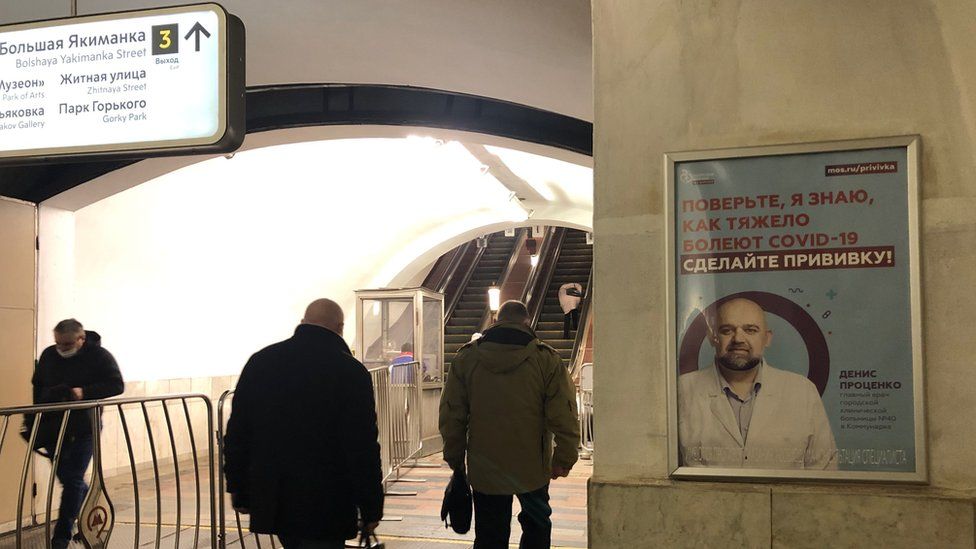
When officials in Sputnik village announced recently that they would be offering Russia's Sputnik V vaccine at the local clinic, just 28 pensioners signed up for a Covid jab.
That endorsement was a political success, as well as a scientific one, for a prestige project loudly trumpeted by Moscow and openly doubted by many in the West.
But while countries from Latin America to Europe are now ordering batches of Sputnik, the rollout in Russia itself has been slow, as people prove deeply reluctant to be injected.
Sputnik for Sputnik
"Everyone scared me that it would hurt, but I didn't feel a thing!" an old-aged pensioner exclaimed, tugging his jumper on after a Sputnik jab in Sputnik village.
Behind him, a nurse leaned in to shout in another pensioner's ear that he should stay off alcohol for a while after his injection.
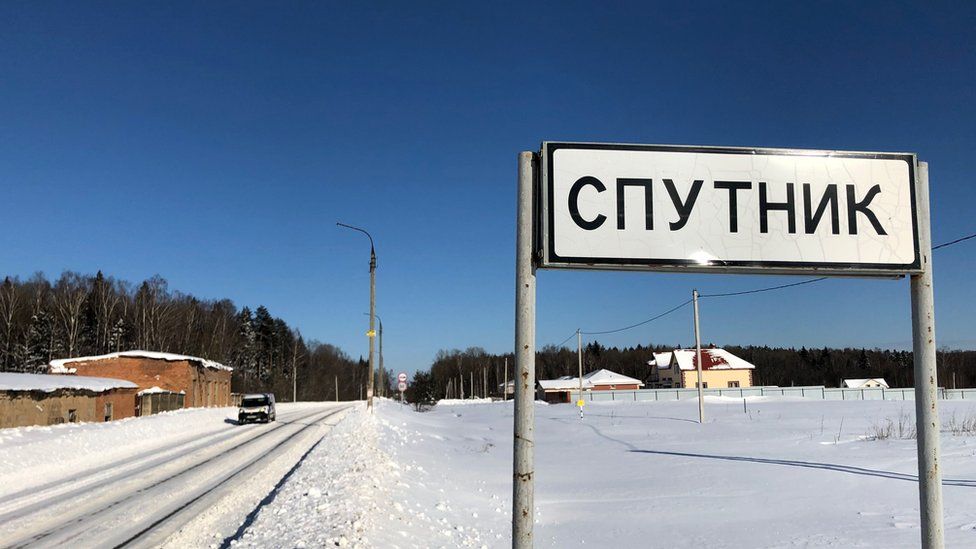
A couple of hours' drive from Moscow, Sputnik village has a cattle farm, a few identical apartment blocks and no indication at all why it was named after a triumph of the Soviet space race.
The cosmic link to the vaccine is clearer.
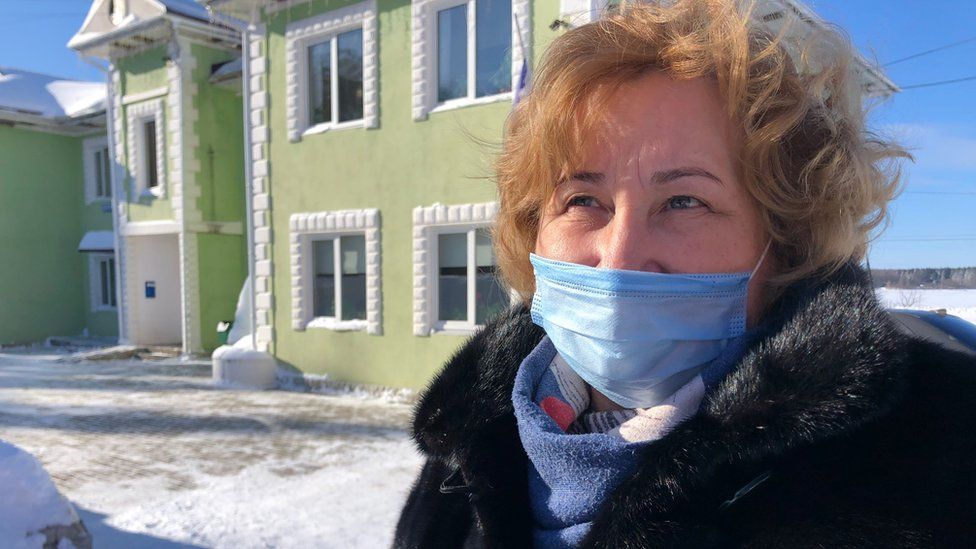
"The Sputnik satellite [in 1957] was a breakthrough and this vaccine is one too!" village official Galina Bordadymova laughed, fur-coated but gloveless in the bitterly cold street.
"We planned for 25 people to come but we got 28, so we're pleased," she insisted, dismissing the suggestion that interest was worryingly low in a population of over 1,000, given the high risk of Covid-19.
Her team had called around older residents, prioritising those most vulnerable to the virus. "Anyone who wanted the vaccine could get it," Ms Bordadymova said.
International interest
Western commentators were initially dismissive, even scornful, of Sputnik V as officials made bold claims on what was then scant evidence. Data from Phase III trials has since shown the vaccine to be effective, with side-effects similar to jabs made in Europe and the US, and interest abroad has surged.
"Even our critics have run out of arguments," Kirill Dmitriev said last month, the head of the RDIF state investment fund that's backing Sputnik.
The RDIF says 39 countries have already registered its vaccine and, to Russia's delight, it's even being called upon to help the vaccine-strapped EU.
Hungary was first to approve the Russian vaccine for emergency use and Slovakia has just received two million doses, shrugging off talk of Sputnik as a "tool" of Russian influence.
Covid-19 doesn't care about geopolitics, Slovak Prime Minister Igor Matovic argued.
"You can say it's Russian weaponisation, or the vaccine is just a victim of the political background, but definitely politics is more explicitly represented in the case of the Russian vaccine than any other produced in the world today," Andrei Kortunov of the Russian International Affairs Council notes.
Still, Russia now has so many requests for Sputnik the Kremlin says it cannot handle them all with current production capacity.
The RDIF says it will supply foreign markets from plants abroad, not with doses meant for Russians, but it has given no details yet, nor a timetable.
"For Putin, creating the vaccine was a way to prove to the world that Russia is a developed, major country able to achieve great success in spheres which demand a lot of skill and technology," Tatiana Stanovaya of the R.Politik analysis firm argues.
But EU-wide approval of Sputnik remains a difficult goal as a result.
"When you decide to buy the Russian vaccine, it seems like you invest in or approve of the achievements of Putin's regime or Putin himself," she says.
Russian caution
In Sputnik village, there is no such discussion of vaccine politics.
Some residents are nervous of catching Covid: two locals in their 50s died of the virus in the first wave of the pandemic. But villagers seem warier still of getting a vaccine.
A poll by sociologists at the Levada Centre this week found only 30% of Russians willing to receive Sputnik V - down 8% since rollout began, and despite safety data now being public.
"People are afraid; there's all sorts of rumours about complications," Lidia Nikolaevna reasoned, shovelling thick snow away from her garage door.
She was in hospital with Covid only recently, so her doctor says she doesn't need a jab yet herself.
"Maybe later," Lidia ventured, echoing other villagers. "People say it's fine, but let's see. If everything goes ok, then I think more people will get vaccinated."
"Russians are conservative: they don't trust their own state and they don't trust whatever can come out of this state," Andrei Kortunov says, explaining people's hesitation.
With no new national lockdown, and minimal mention of Covid deaths by officials, they could be forgiven for thinking the danger had passed.
State TV has not been deployed with its full, persuasive force and President Vladimir Putin himself still has not been vaccinated.
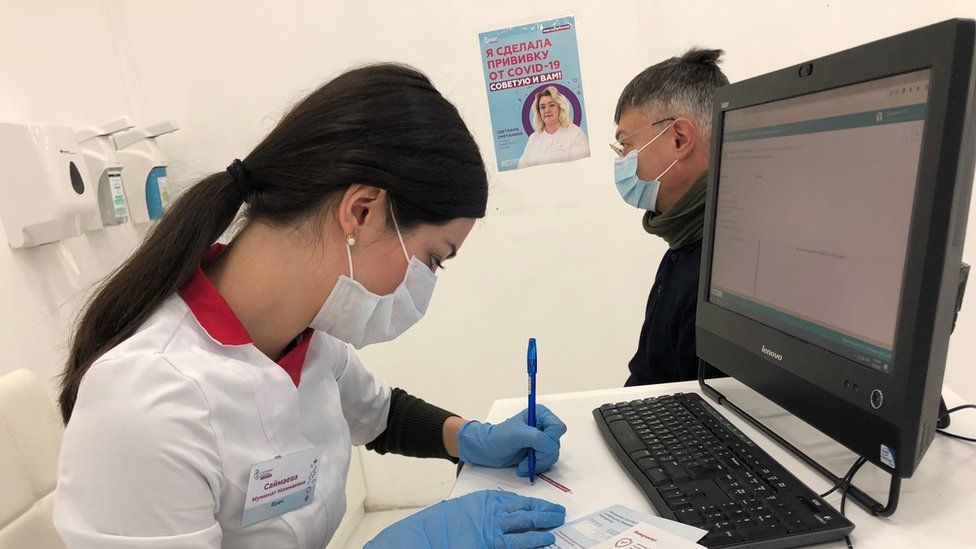
So despite remote rollouts like in Sputnik and pop-up vaccination points in city shopping centres, only four million Russians have so far had a Covid jab - far below the health ministry target of 60% of all adults in six months.
The Kremlin insists there is no deficit of vaccine for domestic use.
But its description of production and domestic demand as "in harmony" for "this stage" suggests a reluctance to promote the vaccination campaign too hard, until more phials are rolling down factory conveyer belts.
Heading home from Sputnik village clinic, pensioner Anatoly says getting his injection was no big deal.
"Wham! It was over in a moment," he says, miming a jab in the arm, but he doubts he really needed vaccinating at all.
"I'm healthy! You just have to drink samogon," Anatoly insists, referring to home-distilled, high-strength alcohol.
"I think that'll protect me from Covid too," the 74-year-old laughs, then wanders off across the snow.
The avalanche danger is decreasing in the Colorado backcounty, but forecasters are cautioning recreationists that danger still lurks deep in the snowpack.
The Colorado Avalanche Information Center on Tuesday said the state is moving into a “lower probability, high consequence situation.”
The avalanche forecast center described the situation as “scary because it is hard to gain experience dealing with lower-probability avalanches.
“You could navigate through two storm slab or wind slab avalanche cycles in a week of riding, but it could take you 10 years to gain the same amount of experience with very large and hard-to-trigger persistent slab avalanches,” the center wrote on Instagram. “Your first encounter with a very large (D3 or D4 on the destructive scale) avalanche could very well be your last. This makes it very difficult to learn from a close call.”
The center said it’s hard to predict which slopes will fail.
“Because very large persistent slab avalanches are so dangerous, the only safe way to manage your risk is by avoiding those suspect slopes,” the center wrote. “On a bad year like this, you might have to avoid those slopes for the rest of the season.”
The center reminded recreationists that the current moderate danger (Level 2 of 5) can include some pretty big avalanches.
As a Summit Daily News reader, you make our work possible.
Now more than ever, your financial support is critical to help us keep our communities informed about the evolving coronavirus pandemic and the impact it is having on our residents and businesses. Every contribution, no matter the size, will make a difference.
Your donation will be used exclusively to support quality, local journalism.
"danger" - Google News
March 03, 2021 at 06:39AM
https://ift.tt/3kGhYq5
Avalanche Center says danger is decreasing but slides are likely to have high consequences - Summit Daily News
"danger" - Google News
https://ift.tt/3bVUlF0
https://ift.tt/3f9EULr
"danger" - Google News
March 03, 2021 at 07:14AM
https://ift.tt/3b9ADHS
Can’t dodge the danger: What’s Cleveland doing about pothole problem - WJW FOX 8 News Cleveland
"danger" - Google News
https://ift.tt/3bVUlF0
https://ift.tt/3f9EULr


:strip_exif(true):strip_icc(true):no_upscale(true):quality(65)/cloudfront-us-east-1.images.arcpublishing.com/gmg/RBFZYXWHNNHOFKZYRFTA5SCCTU.png)