Search

Wednesday, September 1, 2021

Wildfire danger: California Dept. of Fish and Wildlife closes properties - KRON4

tetekrefil.blogspot.com

[unable to retrieve full-text content]

Wildfire danger: California Dept. of Fish and Wildlife closes properties  KRON4

"danger" - Google News
September 02, 2021 at 07:37AM
https://ift.tt/3zD0m5r

Wildfire danger: California Dept. of Fish and Wildlife closes properties - KRON4
"danger" - Google News
https://ift.tt/3bVUlF0
https://ift.tt/3f9EULr

Warming Atlantic forces whales into new habitats, danger | Cornell Chronicle - Cornell Chronicle

tetekrefil.blogspot.com

Warming oceans have driven the critically endangered North Atlantic right whale population from its traditional and protected habitat, exposing the animals to more lethal ship strikes, disastrous commercial fishing entanglements and greatly reduced calving rates.

Without improving its management, the right whale populations will decline and potentially become extinct in the coming decades, according to a Cornell- and University of South Carolina-led report in the Sept. 1 journal Oceanography.

“Most of the warming in the Gulf of Maine is not coming from the atmosphere or ocean surface, as one may think,” said senior author Charles Greene, professor emeritus in the Department of Earth and Atmospheric Sciences in the College of Agriculture and Life Sciences. “It is coming from invading slope water many hundreds of feet below the ocean surface, forcing the right whales to abandon their traditional habitat.”

Since 2010, the calving rate has declined and the right whale population has dropped by an estimated 26%, according to the paper. At the beginning of the decade, the North Atlantic right whale population had numbered over 500. Now, the North Atlantic Right Whale Consortium estimates the population at just 356 whales.

The species is considered critically endangered by the International Union for Conservation of Nature Red List of Threatened Species.

Individual whales are not interchangeable; each right whale has its own name and personality, and scientists know them quite well. The whales have been given monikers including Tux, Popcorn, Arrow and Sundog. When scientists spot the right whales, they log the sighting into an international catalog for a perpetually updated census.

“Right whales are one of the best studied, best understood populations in the ocean,” said Greene., a faculty fellow at the Cornell Atkinson Center for Sustainability. “We basically know every individual. It’s very rare that you can study a population where you know everybody.”

And when the right whales have run-ins with humans, such as large ships or commercial fishing lines, scientists can easily identify their carcasses.

The warm slope water entering the Gulf of Maine at depth derives its heat from the Gulf Stream. As the tail end of the Atlantic Meridional Overturning Circulation, the Gulf Stream has changed its trajectory dramatically during the past ten years.

“Due to a warming climate, the Atlantic Meridional Overturning Circulation is slowing down, causing the Gulf Stream to move North, injecting warmer and saltier slope water into the Gulf of Maine,” Greene said.

The warming Gulf of Maine has reduced the abundance of copepods, the tiny crustaceans that serve as the right whales’ favorite snack. This has reduced right whale calving rates and forced the whales to abandon their mid-summer feeding grounds in the Gulf of Maine. Instead, the whales have headed north to the cooler waters of the Gulf of St. Lawrence.

Since 2015, scientists have witnessed an increased number of right whales feeding in the Gulf of St. Lawrence, where there were no protections in place to prevent ship strikes and fishing gear entanglement. This has led to an Unusual Mortality Event declared by NOAA in 2017, when 17 right whale deaths were confirmed, mostly in the Gulf of St. Lawrence. Ten right whales were found dead in 2019, while for 2020 and 2021, four deaths have occurred thus far.

“Right whales continue to die each year,” said lead author Erin Meyer-Gutbrod, Ph.D. ’16, assistant professor at the University of South Carolina. “Protective policies must be strengthened immediately before this species declines past the point of no-return.”

Ocean scientists are hoping for new policies on rope-free fishing gear, vessel speed limit enforcement and money for monitoring and ecosystem forecasting.

“Right whale populations can shift quickly and unexpectedly in our changing climate,” Meyer-Gutbrod said. “There is no time to waste.”

In addition to Greene and Meyer-Gutbrod, co-authors on the research, “Ocean Regime Shift is Driving Collapse of the North Atlantic Right Whale Population,” are Kimberley T.A. Davies, assistant professor, University of New Brunswick, Canada; and David G. Johns, head of the Continuous Plankton Recorder Survey, Marine Biological Association of the United Kingdom, Plymouth, United Kingdom.

Funding for this research was provided by the Lenfest Ocean Program.

Adblock test (Why?)


"danger" - Google News
September 01, 2021 at 08:05PM
https://ift.tt/3t3fxlI

Warming Atlantic forces whales into new habitats, danger | Cornell Chronicle - Cornell Chronicle
"danger" - Google News
https://ift.tt/3bVUlF0
https://ift.tt/3f9EULr

Market Report: The Many Different Varieties of Eggplant - SM Mirror - Santa Monica Mirror

tetekrefil.blogspot.com

[unable to retrieve full-text content]

Market Report: The Many Different Varieties of Eggplant - SM Mirror  Santa Monica Mirror

"many" - Google News
September 01, 2021 at 07:27PM
https://ift.tt/38y8LLs

Market Report: The Many Different Varieties of Eggplant - SM Mirror - Santa Monica Mirror
"many" - Google News
https://ift.tt/2OYUfnl
https://ift.tt/3f9EULr

Heat danger continues today due to widespread power outages - WAFB

tetekrefil.blogspot.com

BATON ROUGE, La. (WAFB) - A Heat Advisory is in effect for all of SE Louisiana and neighboring counties in SW and coastal Mississippi from 10 a.m. through 6 p.m. Today’s high temperatures will top out in the low 90s for most, with the potential for heat index values to top 105° in some areas. The combination of widespread power outages and the ongoing recovery effort make today’s heat a real danger. Try to find ways to cool off, take frequent breaks, and drink plenty of water.

Heat advisory for Wednesday, Sept. 1
Heat advisory for Wednesday, Sept. 1(WAFB)

While heat is today’s main headline, scattered showers and thunderstorms are once again in the forecast. The morning should start out mainly dry, but storms will begin to fire as temperatures climb into the 90s. And as we saw on Tuesday, locally heavy rainfall will be possible in any stronger storms.

Pinpoint forecast for Wednesday, Sept. 1.
Pinpoint forecast for Wednesday, Sept. 1.(WAFB)
WPC precipitation forecast for Wednesday, Sept. 1.
WPC precipitation forecast for Wednesday, Sept. 1.(WAFB)

Another heat advisory is already posted for Thursday, with the expectation that temperatures will again climb into the low 90s and heat index values could reach 105° or above. Rain chances may trend a touch higher as a weak cold front approaches from the north, with a 50% chance of showers and thunderstorms in the forecast.

Latest guidance suggests that front may not have as much of a push to the south as shown a day or two ago, but it should still be enough to usher in some slightly drier air for the weekend. Rain chances for Friday and Saturday will run 20% or less, with a 30% chance of showers and thunderstorms by Sunday.

10 day forecast as of Wednesday, Sept. 1.
10 day forecast as of Wednesday, Sept. 1.(WAFB)

Ida continues to be an issue today, with a significant threat of flooding from the Appalachians into the Northeast. Cities like Washington, D.C., Philadelphia, New York City, and Boston are all under the gun for potentially heavy and flooding rains as Ida’s remnants track toward the East Coast. A rare ‘high risk’ of flooding has been issued in some of these areas.

Elsewhere, Tropical Storm Larry formed south of the Cabo Verde Islands in the eastern Atlantic on Wednesday morning. Larry is forecast to become the season’s third major hurricane, but should remain over the open Atlantic for at least the next five days.

NHC outlook as of 1 a.m. Wednesday, Sept. 1.
NHC outlook as of 1 a.m. Wednesday, Sept. 1.(WAFB)

Tropical Depression Kate continues to hang on in the central Atlantic, but is not expected to threaten and land areas. And the National Hurricane Center gives an area of low pressure in the SW Caribbean a 20% chance of development. It looks like land interaction with Central America and/or the Yucatan Peninsula may limit its development potential later in the week.

Click here to report a typo.

Copyright 2021 WAFB. All rights reserved.

Adblock test (Why?)


"danger" - Google News
September 01, 2021 at 05:23PM
https://ift.tt/3DuVwcC

Heat danger continues today due to widespread power outages - WAFB
"danger" - Google News
https://ift.tt/3bVUlF0
https://ift.tt/3f9EULr

Raising Awareness of a Silent Danger After Bariatric Surgery - UConn Today

tetekrefil.blogspot.com

A serious side effect of weight-loss surgery can take more than a year to appear. Vanessa Hurta is spreading the word.

Hurta, who completed her doctorate of nursing practice at UConn’s School of Nursing this month, has worked as a nurse practitioner in a bariatric surgery practice for many years. UConn’s DNP program requires students to conduct a scholarly project translating primary research into clinical practice. Hurta saw the opportunity to raise awareness of an uncommon but dangerous side effect of bariatric surgery: sudden, dramatic dips in blood sugar, also called post-bariatric hypoglycemia.

Vanessa Hurta.
Vanessa Hurta. (Photo by Whitney J. Fox Photography LLC)

“People can have tremors, seizures, get confused, faint, or even fall into a coma,” from hypoglycemia, Hurta says. It can make it dangerous for people to drive, work with heavy machinery, or take care of children. Hypoglycemia can happen to people who’ve had gastric bypasses or other weight-loss related stomach surgeries. It often takes more than a year to manifest, and it can sneak up on people.

“You really don’t want to faint while driving,” or have some other catastrophic thing happen, Hurta says. Usually a catastrophic event isn’t the first sign of hypoglycemia. But people can miss the subtler warning signs.

So Hurta designed a few simple questions to ask bariatric surgery patients at their one-year follow up appointment such as whether they had ever felt confused or sleepy about an hour after eating.

And she tested them in her own practice. She and her colleagues began identifying patients who had mild hypoglycemia symptoms before a serious event occurred. Once they found a person was at risk, they could give them strategies for diet and staying safe, as well as tips for noticing warning signs before their blood sugar plummeted. Some also were referred to endocrinologists for further advice and evaluation.

Her practice plans to keep using these questions in routine follow up appointments, and Hurta hopes other practices adopt them as well and spread the word to primary care doctors, who may not realize their patients are at risk.

Hurta herself is planning on moving to a new challenge: director of clinical services for the Westport-Weston Health District.

“I’ve always wanted to do population health,” Hurta says. Her next research project? Conducting a community health needs assessment for the whole community the district serves.

Adblock test (Why?)


"danger" - Google News
September 01, 2021 at 05:32PM
https://ift.tt/3kBcrS4

Raising Awareness of a Silent Danger After Bariatric Surgery - UConn Today
"danger" - Google News
https://ift.tt/3bVUlF0
https://ift.tt/3f9EULr

New Texas Voting, Abortion And Guns Bills Become Law - NPR

tetekrefil.blogspot.com

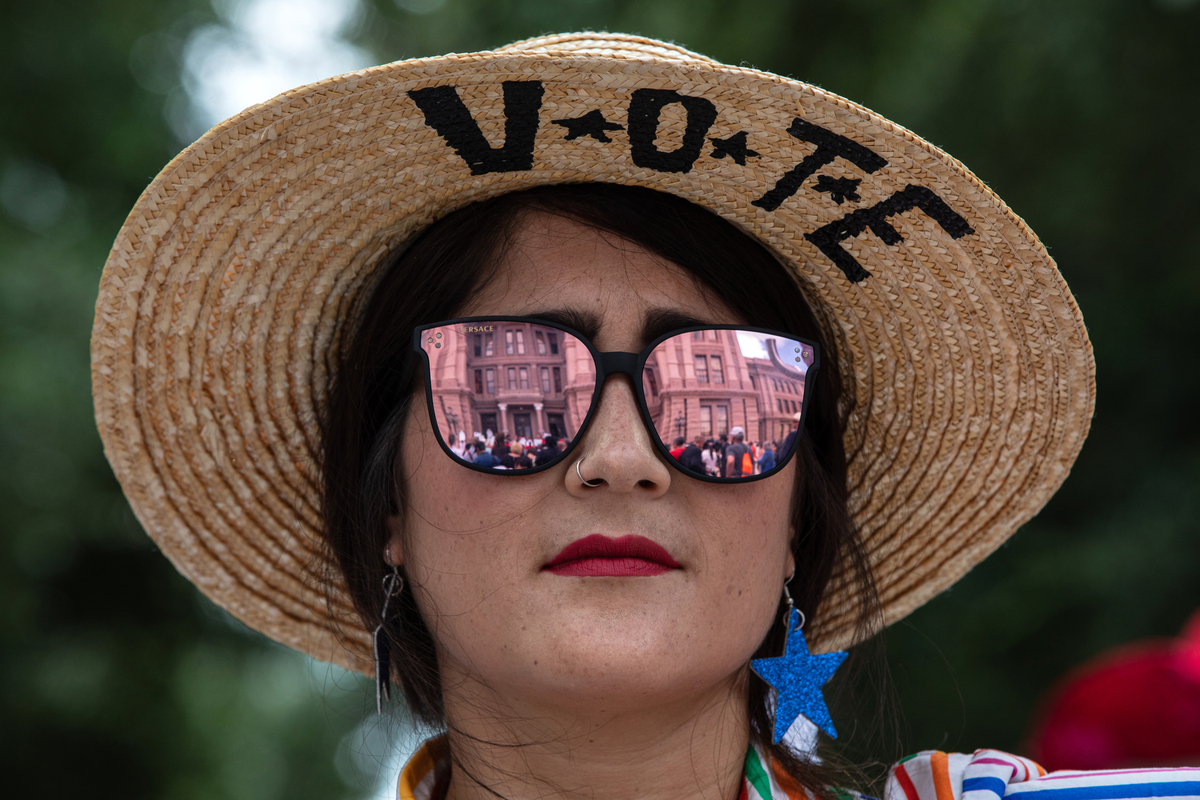
Jessica Marie Ramirez attends a voting rights rally outside of the Texas State Capitol on July 8 in Austin, Texas. Tamir Kalifa/Getty Images

Tamir Kalifa/Getty Images

In Texas, more than 650 new laws go into effect Wednesday passed by the Republican-led state legislature in the 2021 regular session. Among them are top conservative priorities passed in other red states around the country this year, but none as big as Texas with more than 29 million residents.

Meanwhile, Texas Democrats have returned to the state after leaving to protest a restrictive voting law. That bill eventually passed Tuesday but won't immediately become law.

Here are some of the major new laws that do take effect Wednesday, Sept. 1, in Texas:

New voting laws. (No, not that one)

The Texas voting bill that's gained the most attention this year is the GOP-backed Senate Bill 1, which passed this week. That still needs Gov. Abbott's signature but some less talked about voting laws take effect Wednesday.

One bans Texas voters from registering using a post office box as their address, another allows the secretary of state to cut funds for voter registrars that fail to remove certain people from the rolls and one more makes it harder to apply for a mail-in ballot for medical reasons.

There are also other, less controversial, voting laws. One that allows people to track their mail-in ballots and another that makes it clear who can be in a polling place: voters, election workers, poll watchers, election judges and law enforcement.

A protester holds a sign outside the Texas state Capitol on May 29 in Austin. Thousands of protesters came out in response to a bill outlawing abortions after cardiac activity is detected in an embryo, sometimes by six weeks of pregnancy. Sergio Flores/Getty Images

Sergio Flores/Getty Images

Cardiac activity abortion ban

Earlier this year, Texas lawmakers passed a bill that could ban the vast majority of abortions in the state.

It prohibits abortions once cardiac activity is detected in an embryo, which can happen as early as about six weeks before many even know they are pregnant.

Unlike other similar bills across the country, Texas' law doesn't set criminal penalties for violating the ban. Instead, the law allows private citizens to sue anyone who helps someone get an abortion.

Abortion rights advocates have asked the U.S. Supreme Court to block the law, saying that if it goes into effect it will essentially eliminate access to abortion in Texas.

"If this law takes effect, anti-abortion protesters could use this law to harass clinics with endless lawsuits that consume their time and resources and could force them to shut down," Marc Hearron, the lead attorney representing plaintiffs in the case, told reporters in July.

Banning 'critical race theory'

Teachers say they don't teach it. Educators say most people — including critics — don't know what it is. Still, this spring lawmakers passed laws banning the teaching of critical race theory in schools.

Nikki Jones, who teaches African American studies at the University of California, Berkeley, described critical race theory as a way to understand how race has been used to influence laws in the U.S.

"It's a way to see race," Jones says. "To see understandings of race, to see racism, in places where it may not otherwise on the surface of it be apparent."

The new law takes on critical race theory without ever naming it. House bill sponsor Steve Toth, a Republican, says the new law is aimed at teaching complex subjects like slavery and racism without making white children feel guilty.

"We need to teach about the ills but you can't blame this generation," Toth says. "Kids are being scapegoated."

Texas history teachers say they don't scapegoat anyone.

Felonies for protesters blocking roads, hospitals

Texas protesters could face felony charges for blocking a roadway or entrance to a hospital after a new law takes effect Wednesday.

The bill was introduced after a protest in California that resulted in protestors blocking two deputies from entering an emergency room.

In Texas, protesters had faced a misdemeanor with up to six months in jail for that offense. The new law increases the penalty to two years.

"As a nurse who's worked in the emergency setting, seconds matter," says Republican state Rep. Stephanie Klick, one of the bill's authors. "A delay of only a few minutes to emergency care can mean the difference between life and death."

But Democratic state Rep. Joe Moody of El Paso says the punishment is too severe.

"What we're doing here is creating a mandatory minimum that is not congruent to anything else that we have," Moody says.

A woman explains handgun merchandise to a customer during the Conservative Political Action Conference CPAC on July 10 in Dallas. Brandon Bell/Getty Images

Brandon Bell/Getty Images

Permitless carry

Texans have had the right to carry a gun in public since 1995. Since then, more gun-friendly legislation has followed. However, you've always needed to obtain a license to be able to take your gun outside your home or vehicle.

Starting Wednesday, that's no longer the case.

The new law allows anyone who can legally own a firearm to carry it in public, as long as it's in a holster. That's a first since Reconstruction.

Texas is now the 20th state to enact what some call "constitutional carry" – something supporters say is a right granted by the Second Amendment.

The law doesn't change eligibility for gun ownership. Texas handgun owners must still be at least 21-years-old and can not have served a sentence for a felony or family violence within the last five years. And the new law also adds several misdemeanors to the list, including assault causing bodily injury, deadly conduct, terroristic threat and disorderly conduct with a firearm.

The law is unpopular among some Texas law enforcement, and according to April polling data from The University of Texas and the Texas Tribune, nearly 60% of Texans oppose permitless carry.

"I think it will mean more handguns in public," says Gyl Switzer, executive director of Texas Gun Sense. "And data show us time, after time, after time that guns don't make us safer."

A ban on homeless encampments

Another new law would ban homeless encampments across the state making it illegal to set up shelter or store belongings for an extended period of time, creating a new class C misdemeanor punishable by a fine of up to $500.

Many believe the legislation is a response to Austin decriminalizing homeless camping in 2019 — a measure that Austin voters voted to overturn in May. The law also limits cities from using parks for temporary camps.

Expanding medical cannabis access

Thousands more Texans will become eligible Wednesday for low-THC medical cannabis oil through the state's compassionate use program.

The new law makes all forms of cancer eligible for the program. Previously, only patients suffering from "terminal" cancer were eligible.

"It's arguable that any form of cancer could be terminal, right?" says Jax Finkel, executive director of Texas National Organization for the Reform of Marijuana Laws. "So it felt like a very arbitrary descriptor."

It also expands use for people suffering from post traumatic stress disorder. Originally, only veterans were eligible. That was changed, in part, after an outpouring of support from veterans who testified that everyone with PTSD should have the same access.

The state's program, though, remains one of the most restrictive in the country.

According to a poll this year from the University of Texas and the Texas Tribune, just more than 10% of Texans believe marijuana should remain illegal in the state.

Education credits for veterans' service

A new law could help the roughly 1.5 million veterans living in Texas get academic credit for skills they learned in the military by creating a universal catalog to translate which military training would apply to certain degrees and certificate programs at Texas trade schools and colleges.

Democratic state Rep. Alex Dominguez, who co-authored the bill, says it was about reducing redundancy for veterans and giving them quicker entry into the civilian workforce.

"My goal is to publish this list so that the veterans themselves can see what they would qualify for," Dominguez says. "A veteran might be leaving military service having always done work in, say, infantry, but they might notice that they have developed enough skills that would help them get a job in, say, law enforcement, or to be a paramedic, for example."

Houston Public Media's Andrew Schneider and Florian Martin; KERA's Bret Jaspers, Haya Panjwani, Ana Perez and Bill Zeeble; KUT's Ashley Lopez, Jerry Quijano and Andrew Weber; and Texas Public Radio's Carolina Cuellar and Jack Morgan contributed to the reporting for this story.

Adblock test (Why?)


"many" - Google News
September 01, 2021 at 04:01PM
https://ift.tt/3gQLIQp

New Texas Voting, Abortion And Guns Bills Become Law - NPR
"many" - Google News
https://ift.tt/2OYUfnl
https://ift.tt/3f9EULr

Man keeps hope alive as family faces danger in Afghanistan - KOB

tetekrefil.blogspot.com

Because he said his family is being hunted — and any information about them could put them in danger.

Mohammed used to work for the U.S. in Afghanistan as a civilian.

"Because when I was kid, I was always saying to my mom that, ‘mom, I need, I want to work with the American people. I want to work with the American people’ — and my dream came through, thank God,’" said Mohammed.

But his dream job came to an end in his hometown of Kabul.

"In 2012, I got several calls from the Taliban,” said Mohammed.

"That if I continue working for the U.S. government, they're going to kill my family in front of my eyes and they're going to kill me too."

Fleeing danger, he came to America and earned his citizenship.

But now, after the U.S. departure, Mohammed said the Taliban is closing in on his family.

He said the Taliban recently ransacked their home, searching for any documentation on where they might be. He also said they are safe — in hiding — for now.

"I tried to do my best, I contacted our government, our senator of New Mexico and I contacted the department of the states and also sent an email for SIV visa about the situation and I never got any response from them. I'm really frustrated about my family, so much," he said.

Despite the lack of help from the government, he is volunteering to be an interpreter for the U.S. Army — flying to help communicate with the tens of thousands Afghans that were evacuated.

Even though his family was left behind, he said he’s hopeful. 

“That's OK, I am trying to help to get help from them. Hopefully they can do something to help my family," Mohammed said. 

He has faith he will be with his family again.

Adblock test (Why?)


"danger" - Google News
September 01, 2021 at 11:10AM
https://ift.tt/3jv0e2a

Man keeps hope alive as family faces danger in Afghanistan - KOB
"danger" - Google News
https://ift.tt/3bVUlF0
https://ift.tt/3f9EULr