Search

Sunday, August 30, 2020

Many Alaska families are eligible for $458 per child in COVID-19 aid, but the program has been plagued with difficulties - Anchorage Daily News

tetekrefil.blogspot.com
We're making coronavirus coverage available without a subscription as a public service. But we depend on reader support to do this work. Please consider joining others in supporting local journalism in Alaska for just $3.23 a week.

A program administered by the state will give hundreds of dollars of federal money to eligible families to help feed their children. The state just extended the deadline to enroll from the end of August to the end of September.

But a lack of information, mail delays, phone and internet access issues and a slowed program rollout with a tight original deadline have led to challenges in connecting families to the benefits, especially in rural Alaska.

The Pandemic-Electronic Benefits Transfer Program is to help reimburse families for unexpected expenses from when they lost access to school meals during pandemic-related school closures this spring, according to the Food Bank of Alaska. The Food Bank is partnering with the state to help enroll families.

Eligible families can get up to $458 for each child. Children must have been enrolled in the spring in a free or reduced-price lunch program or they must have attended a school with a free lunch program.

“This is a tremendous resource for families,” said Cara Durr, the Food Bank of Alaska’s director of public engagement. ���...That’s some substantial money to help with groceries and help families that are struggling.”

The extra benefits come as part of the federal Families First Coronavirus Response Act, and the money will be disbursed through the Alaska Department of Health and Human Services’ Division of Public Assistance.

Money will be automatically disbursed at the end of August to qualifying families who are already enrolled in food stamp benefits, or SNAP.

But families on the free or reduced-price lunch program who aren’t enrolled in SNAP must opt in to get the benefits by submitting a form that’s been mailed to them by the state.

About 27,000 letters have been sent so far to the families that need to opt in to the benefits, according to Shawnda O’Brien, director of the state Division of Public Assistance.

The letters state that the deadline for families to enroll was set for Aug. 31. But due to concerns with mail delays, that deadline was extended Thursday to Sept. 30 to help give rural families more time to return the form, according to O’Brien.

The Food Bank of Alaska is also partnering with the state to help enroll families through a text or call-in service that allows families to use an online form instead of mail.

Many eligible families do not know about the program.

“There has not been an organized effort to really get the word out and to really ensure that there’s broad public messaging around the fact that these benefits are available,” said Rep. Tiffany Zulkosky, D-Bethel.

Many rural families might not have internet access or the ability to call or text the Food Bank — and that’s if they even know of the program, Zulkosky said.

“There’s already, under ideal circumstances, such difficulty in getting timely access to public information in getting access to typical services,” she said.

Then add in a pandemic, a fraught Postal Service and families who are now struggling with big changes to schools and economic hardship, she said.

When Bethel mother Melanie Fredericks received the letter on Monday from the division, she thought it was a scam, she said.

“I thought, ‘Huh, that’s quite strange. I don’t get mail from them and I don’t qualify for any of their benefits,’” Fredericks said.

She scoured the Division of Public Assistance website and found no information on the program. Fredericks decided to post on social media to see if anyone else had gotten a similar letter.

Immediately she heard from parents who also thought it was a scam or that they didn’t qualify, she said. Some parents threw the letter away as soon as they received it, she said.

Durr said many eligible families began receiving mailed letters with applications notifying them of the program just this week, and that letter now has the wrong deadline date.

Other eligible families have not yet received a letter, she said. Some won’t get one at all because the state could not acquire their addresses.

The state sent out another batch of letters to some of the families that were missed in the first batch with a new deadline date of Sept. 15, Durr said.

O’Brien has now said the state will accept applications until Sept. 30. The state is being “flexible about that deadline because we do recognize that there is a lot of delay in the mail system,” coupled with confusion from families that are unfamiliar with the public assistance division, she said.

But the division is up against a federal deadline — the aid must be disbursed by Sept. 30, she said. That means the sooner the division receives the enrollment forms, the better it can ensure families get the benefit, she said.

Whether the division can disburse money to families whose forms arrive in the last few days of September “will depend on how many are received up to the deadline and how fast staff can get the work done,” O’Brien said.

But its rollout has been slowed by several issues, according to O’Brien.

The Division of Public Assistance first had to wait for information from the state education department on which families qualify. Then a computer system crashed for a week at the division, swallowing its information technology resources, she said.

“There were some competing priorities at the time,” O’Brien said.

Still, it’s working to get the program out “as quickly as possible,” she said. Her office is up against the federal deadline and will have to process all 27,000-plus forms, she said.

The Food Bank is working to help gather applications, but there’s been a deluge of requests from families.

“We’re quickly becoming a little overwhelmed,” Durr said.

Since Tuesday they had more than 650 voicemails and almost 5,000 texts. They have already processed more than 2,700 applications, she said.

The initial August deadline sent the Food Bank into a “bit of a triage mode,” and sparked concerns that families in rural areas would miss out on the benefits, Durr said. The forms to opt-in are often being mailed both ways and it only gave about 10 or 11 days for that back-and-forth delivery to occur, she said.

The USDA recently authorized states to offer the benefits for school closures in August and September, but the money would also need to be issued by the Sept. 30 deadline, Durr said.

That’s almost impossible because there will be a new set of students, school district enrollment data for the new school year is not available until October and school districts all have different COVID-19 mitigation plans with varying levels of shutdowns.

“We are exploring what options might be available,” Durr said. “But there are some very serious barriers.”

• • •

Let's block ads! (Why?)


"many" - Google News
August 31, 2020 at 01:21AM
https://ift.tt/3beZYhV

Many Alaska families are eligible for $458 per child in COVID-19 aid, but the program has been plagued with difficulties - Anchorage Daily News
"many" - Google News
https://ift.tt/2OYUfnl
https://ift.tt/3f9EULr

NWS: heat added danger during hurricane recovery - Beaumont Enterprise

tetekrefil.blogspot.com

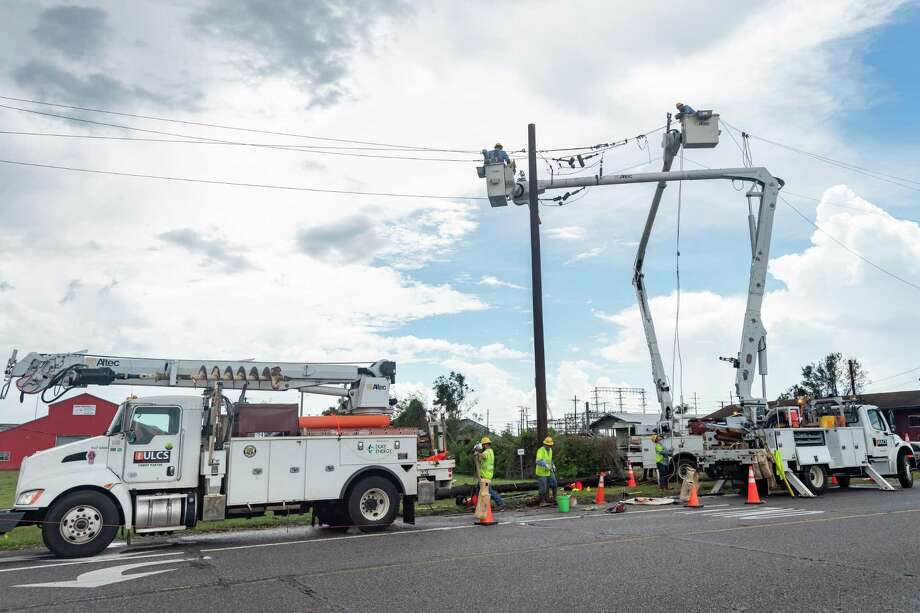
Port Arthur officials are expected to lift a mandatory evacuation order Monday morning at 6 a.m., with power expected to return to most of the impacted areas sometime Sunday night.

The order was extended over the weekend as sweltering temperatures, paired with widespread power outages caused the National Weather Service to issue a Heat Advisory under an amended criteria.

“Due to the increased heat stress from power outages and outdoor relief activities related to Hurricane Laura, we have temporarily lowered our Heat Advisory criteria to heat indices above 100F instead of 108F,” NWS Lake Charles warning coordination meteorologist Roger Erickson said. “Counties and parishes with greater than 10% of customers with power outages are included in this temporary area of lowered criteria.”

Many residents have already returned, but Port Arthur Mayor Thurman Bartie asked residents to wait one more day if possible.

“If you wait one more day, you will be returning to much better conditions than if you come back tonight,” Bartie told The Enterprise.

Port Arthur and Beaumont officials urged residents to stay indoors, and limit physical exertion during the hottest part of the day, but did not open cooling centers or distribute water as of this weekend.

“Get yourself a glass of cold water,” Bartie said.

Academy Sports provided free cases of water at their Beaumont and Port Arthur stores over the weekend to aid with recovery efforts.

While a Sunday heat advisory is expected to expire at 7 p.m., Erickson said current conditions will likely cause more advisories to be issued in the coming days.

Barry Goldsmith, Warning Coordinator Meteorologist for the Brownsville/Rio Grande National Weather Service station said heat can be a dangerous addition to the recovery phase after a hurricane like Laura blows through a region.

“The heat exhaustion potential goes up dramatically when people are out dealing with … heat that they are not used to dealing with, when you are going from place to place in the recovery phase of a hurricane,” Goldsmith told The Enterprise. “Heat stroke is one of the more common indirect fatalities, unfortunately, after a storm.”

In Beaumont, Police Department spokeswoman Carol Riley said the heat is just one of several hazards the City is warning residents about as they go about assessing and repairing damage from Hurricane Laura.

“We are trying to warn people about some of the normal hazards they face while they are trying to remove debris,” Riley said. “Our big big concern right now is people running their generators to keep their homes cool, and refilling their generators while they're still hot … and while they're running. Those have led to some fires in Southeast Texas.”

Riley also said residents can do any work needed in the morning or evening, or when light rain is falling to help cool down.

Several Southeast Texas residents have also died in recent days as a result of improperly placed generators releasing carbon monoxide into their homes.

As a result, city officials are continuing to underscore the need for generators to be operated outside, and 20 feet away from any open windows or doors to avoid exposure to the poisonous gas.

isaac.windes@hearstnp.com

twitter.com/isaacdwindes

Let's block ads! (Why?)


"danger" - Google News
August 31, 2020 at 02:50AM
https://ift.tt/3bati9c

NWS: heat added danger during hurricane recovery - Beaumont Enterprise
"danger" - Google News
https://ift.tt/3bVUlF0
https://ift.tt/3f9EULr

Netanyahu: 'Many more' secret talks with Arab nations after US-brokered UAE agreement - Fox News

tetekrefil.blogspot.com

Israeli Prime Minister Benjamin Netanyahu said that there are "many more unpublicized meetings with Arab and Muslim leaders to normalize relations with the state of Israel" following its historic peace agreement with the United Arab Emirates brokered by the United States earlier this month.

The comment comes on the heels of a formal decree by the ruler of the UAE on Saturday ending the country's boycott of Israel, which has opened trade and commerce between the two nations. The decree formally eliminates a 1972 law on the UAE's books since just after the country's formation, which mirrored the widely held stance by Arab nations at the time that recognition of Israel would only come after the Palestinians had an independent state of their own.

Netanyahu said the UAE's decision opens the door for "unbridled trade, tourism, investments and exchanges between the Middle East's two most advanced economies" and thanked the Trump administration for their support in brokering the historic deal.

Netanyahu and White House adviser Jared Kushner make statements to the press about the Israeli-United Arab Emirates peace accords, in Jerusalem, Sunday, Aug. 30, 2020. (Debbie Hill/Pool Photo via AP)

Netanyahu and White House adviser Jared Kushner make statements to the press about the Israeli-United Arab Emirates peace accords, in Jerusalem, Sunday, Aug. 30, 2020. (Debbie Hill/Pool Photo via AP)

"We could not seal this historic peace with the Emirates and with others that are in line without the tremendous support of our great and loyal friends from the United States of America," Netanyahu said.

SEE IT: PAIR OF RUSSIAN JETS GET WITHIN 100 FEET OF US AIR FORCE PLANE

The UAE is the third Arab nation, after Egypt and Jordan, to currently have diplomatic relations with Israel.

In recent years, the UAE has held quiet talks with Israel and allowed Israelis with second passports into the country for trade and talks. Opening ties may also help the Emirates access advanced American weaponry, like the F-35 fighter jet that right now only Israel flies in the Mideast.

"Israel continues to be strengthened and is one of our highest priorities of the Trump administration," U.S. National Security Advisor Robert O'Brien said. "Our two nations have never been closer."

O'Brien, left, Netanyahu, center, and White House adviser Jared Kushner make joint statements to the press about the Israeli-United Arab Emirates peace accords, in Jerusalem, Sunday, Aug. 30, 2020. (Debbie Hill/Pool Photo via AP)

O'Brien, left, Netanyahu, center, and White House adviser Jared Kushner make joint statements to the press about the Israeli-United Arab Emirates peace accords, in Jerusalem, Sunday, Aug. 30, 2020. (Debbie Hill/Pool Photo via AP)

Israel is set for its first commercial passenger flight to the United Arab Emirates on Monday.

The plane will carry U.S. and Israeli officials, including President Donald Trump's son-in-law, Jared Kushner, National Security Adviser Robert O’Brien, Mideast envoy Avi Berkowitz and envoy for Iran Brian Hook.

CLICK HERE TO GET THE FOX NEWS APP

The Associated Press contributed to this report.

Let's block ads! (Why?)


"many" - Google News
August 30, 2020 at 10:17PM
https://ift.tt/2QF0DQd

Netanyahu: 'Many more' secret talks with Arab nations after US-brokered UAE agreement - Fox News
"many" - Google News
https://ift.tt/2OYUfnl
https://ift.tt/3f9EULr

Sunday morning fire update: Rains create danger for fire crews on Grizzly Creek, forecast winds Monday could increase activity - Glenwood Springs Post Independent

tetekrefil.blogspot.com
Burn area in the median of Interstate 70 in Glenwood Canyon during the initial days of the Grizzly Creek Fire earlier this month.
Courtesy CDOT

Solid rain on Saturday increased the danger for fire crews working in drainages and on slopes on the Grizzly Creek Fire, but containment still increased to 73%.

“The steep terrain, combined with a solid wetting rain, created treacherous working conditions on slopes and drainage,” a Sunday morning update from the Alaska Incident Management Team reports. “Crews were pulled off the line to wait for the rain to pass. Firefighters exercised extreme caution on the slippery roads.”

The Grizzly Creek Fire started Aug. 10 in Glenwood Canyon along Interstate 70 and is currently 32,464 acres. As containment of the fire increases, firefighters are working in more rugged and dangerous terrain.

“Helicopters were required to deliver two additional crews to an uncontained section of the fire perimeter, where they are working on a fireline to connect the Grizzly Creek rim to the No Name rim,” Sunday’s update states. “These two drainages comprise some of the most dangerous terrain on this fire and continue to present a challenge.”

Another crew is being added Sunday to help in this area.

Although temperatures are expected to remain lower heading into the week, fire activity could increase Monday.

“Cold fronts are forecast through Sunday and Monday, bringing isolated showers and strong winds,” the release states. “Despite the chance for local precipitation, fuels are expected to dry by Monday, which could be a critical fire day with low relative humidities and winds gusting to 37 mph.”

An update Sunday also stated that air quality reports would no longer be issued for the Grizzly Creek Fire.

Road closures are still in for Coffee Pot Road, Transfer Trail Road and areas of the Flat Top Wilderness accessed by those roads, as do many other roads in and around the White River National Forest. Go to http://www.cotrip.org for the most up-to-date road conditions.

Readers around Glenwood Springs and Garfield County make the Post Independent’s work possible. Your financial contribution supports our efforts to deliver quality, locally relevant journalism.

Now more than ever, your support is critical to help us keep our community informed about the evolving coronavirus pandemic and the impact it is having locally. Every contribution, however large or small, will make a difference.

Each donation will be used exclusively for the development and creation of increased news coverage.


Let's block ads! (Why?)


"danger" - Google News
August 30, 2020 at 11:32PM
https://ift.tt/2QDt9lo

Sunday morning fire update: Rains create danger for fire crews on Grizzly Creek, forecast winds Monday could increase activity - Glenwood Springs Post Independent
"danger" - Google News
https://ift.tt/3bVUlF0
https://ift.tt/3f9EULr

For many private school students in Clark County, it's back to class - The Columbian

tetekrefil.blogspot.com

Nonpublic schools cite smaller classes, engaged parents as they reopen doors

To step onto the campus of the Gardner School of Arts and Sciences is to step into a parallel universe from the nearby public schools.

Instead of Zoom lessons, there are outdoor classrooms beneath large white tents. Teachers lounge in distantly spaced yard chairs for their professional development, rather than working online from afar.

The Gardner School, a small, private campus near Washington State University Vancouver, will be open for business on Tuesday. The school joins a legion of private schools opting to reopen for in-person instruction, while public school peers will continue remote learning for at least several weeks.

Private school administrators in Clark County say they’re prepared to follow public health and safety guidelines so students can return to the classroom. Some are opting to continue online education. Others, like Seton Catholic High School and Cornerstone Christian Academy, are offering a blended approach.

Many, however, plan to reopen fully.

“It was clear we could follow guidelines if we were creative,” Gardner Head of School Emily Davis said.

(Small) size advantage

State officials recommend schools in counties with high rates of transmission open remotely, or with hybrid models that allow small groups of children onto campus at alternating times. Unlike in Oregon, however, that’s not a mandate, leaving it up to schools to determine whether they can put safety guidelines in place to reopen.

Private schools say they’ve answered that call, creating new classrooms and installing shields on desks. They’ve put mask requirements and alternate schedules in place. King’s Way Christian Schools installed cameras that take people’s temperatures as they walk into the building and scan their faces to ensure they’re wearing a face covering. The Gardner School purchased an application so families can complete daily health screenings from their phones.

Seton Catholic High School will start remotely at first, with students watching teachers on live videos in their classrooms as though they were in the room. Principal Robert Rusk is cautiously optimistic the school will be able to phase students in, 25 percent at a time, to return to full capacity soon.

“We feel very confident,” Rusk said.

Private school officials acknowledge, however, they have built-in advantages over the public school system: smaller class sizes, more physical space to spread out and a highly engaged group of parents.

“I would be naive to say we have the challenges the public school system has,” King’s Way Christian Schools Superintendent Jason Tindol said.

instagram

Those advantages are largely available only to those parents who can afford thousands of dollars in tuition. The Gardner School, for example, costs $18,950 a year for students in first through eighth grade. King’s Way starts at $8,815 a year for elementary school students and $12,920 a year for high school students.

Those schools were also eligible for Paycheck Protection Program loans; Seton Catholic High School and Firm Foundation Christian School each received loans between $350,000 and $1 million, while King’s Way received between $1 million and 2 million.

“The private schools can be much more nimble,” said Bob Pianta, dean of the Curry School of Education and Human Development at the University of Virginia. “They’re smaller by almost all scale. They deal with a more homogenous population, typically more resourced.”

Demand high

Despite the cost, private school administrators say they’re flush with families trying to move their children from public school to private schools.

Sandra Yager, superintendent of Cornerstone Christian Academy, said the school has been giving an historic number of tours compared with years past. Cornerstone is offering full, in-person instruction to all students in kindergarten through second grade. Older students can opt between in-person and online instruction.

The school’s roughly $8,000-a-year tuition, meanwhile, will remain the same regardless of which option families pick.

“It’s been a great problem to have,” Yager said of the recent interest in their programs.

When asked about enrollment at King’s Way Christian Schools, Tindol sighs and laughs. An estimated 25 percent of the school’s 900-student body is made up of new students. That’s up from the typical 3 to 5 percent.

“Families are scared,” he said. “Families want to meet in person.”

The renewed interest in private schools doesn’t surprise Pianta. He said the University of Virginia has been inundated with calls from parents looking to organize small pods, home-based classes with a few parents pitching in to pay a teacher for private lessons.

“If parents have the economic means, I can see where the decision to move their child to a private school for some is something that’s likely to increase,” he said. “To the extend that it leaches human capital out of the public schools, it’s going to exacerbate inequities.”

Guidelines, not requirements

The state has advised all schools, public and private, to look at two-week transmission rates in considering whether to reopen campuses. Counties in which the transmission rate is higher than 75 new cases per 100,000 residents are considered high risk and are advised to open schools remotely.

Counties where the transmission rate is between 25 and 75 new cases per 100,000 are considered moderate risk, and can start bringing in small groups of students. Clark County is on the high end of that, with the latest reports showing 71.6 new cases per 100,000 residents in a two-week period.

In Washington, however, those are guidelines, not requirements. The state has left it up to school districts to decide for themselves if they can reopen so long as they’re able to meet safety mandates.

At the Gardner School, which has 75 students in preschool through eighth grade, the choice was clear. Parents wanted their children back in the classroom, Davis said, and the school’s outdoor-driven curriculum gave them the means to do it safely.

“This is completely exhausting, but we feel this is what’s needed for our community’s mental health,” Davis said.

Let's block ads! (Why?)


"many" - Google News
August 30, 2020 at 08:05PM
https://ift.tt/31DqHSe

For many private school students in Clark County, it's back to class - The Columbian
"many" - Google News
https://ift.tt/2OYUfnl
https://ift.tt/3f9EULr

Many older workers entered the pandemic with little saved toward retirement. Here's how they can improve their finances now - CNBC

tetekrefil.blogspot.com
DusanManic | iStock | Getty Images

Many people's retirement dreams received a reality check following the economic downturn caused by the coronavirus pandemic.

New research shows that's especially true for older workers.

A recent report from Democrats on the Joint Economic Committee of Congress found that workers ages 65 and up were hit harder by unemployment than prime age workers ages 25 to 54. In April, older workers' unemployment rate exceeded prime age workers by three percentage points, the biggest gap ever recorded, the research found.

And while that difference narrowed in the following months, the concern is that could be because older workers simply gave up looking for work.

Near retirees — those ages 55 to 64 — are not in a much better position. One-third of those workers have neither a pension nor a 401(k) plan or other employer-provided retirement savings plan.

Workers in that age group who do have access to those retirement accounts have a median of $88,000 saved, according to the report.

Consequently, people who are approaching retirement may want to work longer. But finding employment opportunities may be tough. Age discrimination and high health care costs can make finding a new job difficult, the report pointed out. Meanwhile, those workers face higher health risks if they are exposed to Covid-19.

"If you're in the 55 to 65 range, it's not just six months, a year or a year and a half, it's the rest of your life that is affected by this," said Rep. Don Beyer, D-Va., vice chair of the U.S. Congress Joint Economic Committee.

Those employment trends may lead older workers who can to pursue non-traditional jobs, such as temporary or part-time work, or work in the gig economy.

Research indicates that about a quarter of older workers ages 50 to 64 are working in those kinds of positions at any given time, according to the Center for Retirement Research at Boston College. That data is from before the pandemic, and those numbers could increase following the high unemployment numbers brought on by the downturn.

The Center for Retirement Research recently evaluated what options older workers who pursue non-traditional work have to shore up their retirement savings.

"That latter part of your career is one where ideally you're making the most you're ever going to make" and have the highest ability to save, said Matt Rutledge, research fellow at the Center for Retirement Research.

"If you don't have a place to put that money aside, you're really missing out compared to the people that do," he said.

One way for those workers to invest is in an individual retirement account, or IRA. The maximum that older workers can save in those accounts, though, is much lower than for a 401(k). In 2020, workers ages 50 and up can invest up to $7,000  year in an IRA, compared to $26,000 for a 401(k).

Yet only about 15% of people of all ages contribute to an IRA, according to the Center for Retirement Research. Some states have established auto IRA programs so that workers who do not have access to retirement plans through their employer can automatically save via their pay checks.

Another way some older workers can still save is through their spouse's 401(k), according to the Center for Retirement Research.

Those couples would need to save more to cover retirement costs for two people. That often does not happen, the report found.

One reason for that is many older workers still may prioritize immediate expenses over their long-term savings goals, Rutledge said.

"A lot of older workers say, 'What difference would a little bit of savings do for me now? It's not going to have time to really grow," Rutledge said.

Admittedly, younger workers stand to benefit the most from putting money toward retirement, because the cash will have more time to compound.

More from Your Money, Your Future:
Trump's payroll tax would 'terminate' Social Security, critics say
Self-employed people may miss out on payroll tax break
Why college students might get less financial aid next year

But there are a couple of things that older workers can still do to help preserve their lifestyles later on.

"The best thing for saving is getting used to living on less," Rutledge said. "You are lowering the bar that you need to clear to be able to afford to live."

Another way to make your money last longer is to keep working if you can.

"As long as you're healthy enough to do so, the best thing you can possibly do for your finances is just to keep working," Rutledge said.

Research has shown that, in some circumstances, working just one year longer can make a bigger difference than saving 1% more over the course of a career, he said.

Let's block ads! (Why?)


"many" - Google News
August 30, 2020 at 08:30PM
https://ift.tt/2QD6Tbk

Many older workers entered the pandemic with little saved toward retirement. Here's how they can improve their finances now - CNBC
"many" - Google News
https://ift.tt/2OYUfnl
https://ift.tt/3f9EULr

Destiny 2, Call Of Duty, GTA 5, Valorant Down For Many, Along With Half The Internet - Forbes