Search

Tuesday, August 31, 2021

Sisters continue a mission of justice and peace, despite danger - Global Sisters Report

tetekrefil.blogspot.com

Life in Nigeria is better experienced than described. A country in West Africa with a population of about 219,000,000, Nigeria has a Christian majority in the east and south, a Muslim majority in the north, and both Christians and Muslims in the west. It is not news anymore that life in Nigeria is as unsafe for its citizens as it is for foreigners. At one time a country with some of the happiest and most religious people in the world, it is currently one of the most terrorized nations on the face of the earth: and this is where the religious sisters witness to the Golden Rule, on a daily basis, without counting the cost.

Equipped with spiritual armor, the sisters traverse the country to strengthen the populace, in spite of physical dangers. In the past, not many sisters were seen in Nigeria engaging in works that would have had a place in the limelight, but a vocation boom has multiplied the number of religious congregations and institutes in the country. Today, sisters are everywhere. Their mission: eloquently advocating for peace, conscientiously cleaning wounds, and courageously wiping the faces of impoverished and traumatized masses who have been turned into refugees in their own country, thus united in hardship. Justice and peace are the watchwords of these sisters.

I have been reflecting on how religious sisters/nuns — women who profess the evangelical counsels of poverty, chastity and obedience — participate in the daily work of peace and justice in Nigeria, to strengthen their resilience in the work of evangelization. Once chosen and called, no one who looks back is worthy of the kingdom (Luke 9:62), and our experiences as sisters in Nigeria, I believe, will be an encouragement to others in other parts of the world.

Corruption has robbed our country of good leadership, impoverished the people, destroyed social amenities and infrastructures, and promoted and empowered terrorists' activities that are violating human rights and rendering many homeless, orphaned and widowed. The recent events of the #EndSars protest in the country is just a tip of the iceberg of brutality which is producing victims who need the attention of sisters in many situations.

As every sector is endangered, the lives of the sisters also are in perpetual danger, yet they go out daily to give hope to the people all over the country in schools, orphanages, civic centers, clinics, hospitals, rehabilitation centers, home visitations, and camps for people who are displaced.

I am still thinking about Sister Henrietta Alokha of Bethlehem Girls College, Lagos, who was killed when a pillar fell on her as she searched for her trapped students, after an explosion leveled their school last year.

Due to insecurity all over the country, the bandits, kidnappers, herdsmen, and Boko Haram activities know no bounds. The fate of sisters engaging in apostolates in every corner of the nation is wrapped in uncertainty.

I remember one example of some sisters working in a diocese in western Nigeria. For years they have been agents of security and peace in the area, where they run a diocesan school. The school has been set on fire three times by parents from an "untouchable tribe," whose children were sent home because of their refusal to pay school fees; not that they could not afford it, but because they felt impunity. Sisters have continued teaching there for the sake of others who also need education. Their perseverance and undaunting spirit always calm the residents of the area.

When I was serving as principal of a school in the north, I watched very traumatized students struggle with perpetual anxiety because of religious differences that led to gunshots and the raiding of churches, schools and homes by terrorists. Here, the sisters organized forums for parents to discuss our common goals for the students' welfare and their positive mental health.

Sisters have also joined our voices in calling for an end to incessant killings in the country, justice for victims and equity for all.

Again, our identifying with the people paves the way to acceptance and collaboration. There is a high acceptance of the sisters among Muslims. They especially appreciate the sisters' habits, which indicate — "we come in peace" — and endear them to the people. Bishops in the north are leveraging this acceptance and are using more sisters in evangelization in the dioceses.

Sisters in the medical field take mobile clinics to very remote settlements, to provide as much help as they are allowed to give to the numerous young mothers who are married off very young due to religious belief in early marriage. Such opportunities are used to instruct the women on topics not prejudicial to religion, to maintain peace and harmony. Many sisters work with displaced persons in camps and use the opportunity to give them hope.

In addition, some sisters engage in advocacy for the vulnerable victims of human traffickers. They, the sisters, go from school to school, to town gatherings, markets and village settings, giving enlightenment programs and training people on various skill acquisitions to develop self-worth and self-confidence, and reduce the chances of being exploited.

Other sisters take in girls with unwanted pregnancies, nurture them to term, and train them in skills for motherhood, thus helping to reduce the rate of abortion. Some get involved in ecumenism and interreligious dialogue programs; since sisters' integrity is not in question, they broker peace and harmony wherever they are. Trust and confidence in the sisters is the only key that opens the door allowing them access to all these places.

Therefore, adorned in their religious habits, sisters work for and among all classes of people; among Christians and non-Christians, in churches and in civic centers, in camps and villages, in schools, clinics and hospitals — anywhere there are human beings in the country, regardless of creed — giving love, offering hope and encouraging fervent faith to drive out fears.

Adblock test (Why?)


"danger" - Google News
August 31, 2021 at 03:11PM
https://ift.tt/2Y1bKdd

Sisters continue a mission of justice and peace, despite danger - Global Sisters Report
"danger" - Google News
https://ift.tt/3bVUlF0
https://ift.tt/3f9EULr

Why so many workers have lost interest in their jobs - BBC News

tetekrefil.blogspot.com
For many, the pandemic has deteriorated our relationship with our jobs. Can you re-ignite the spark – and should you even try?

It wasn’t long into the pandemic that Danielle, a 31-year-old public-school teacher in New Jersey, US, realized almost everything she loved about her job had disappeared.

“I still loved teaching, but the circumstances didn’t allow me to do my job the way I wanted to do it,” she says. “The way I think students learn best is through talking to each other and asking questions, and we couldn’t do any of that. They weren’t allowed to work in groups, they barely talked. I felt like Charlie Brown’s teacher from Peanuts: ‘wah waah waaah wah...’ It was awful.”

She never doubted teaching was her calling before the pandemic, but Danielle began to dread going to work.

Throughout the past year and a half, many employees have similarly felt their relationships to their once-loved jobs deteriorate, as work has become remarkably different. Some found pre-existing disinterest amplified, while others discovered a new level of distaste for their positions or entire fields. And although not every worker has to love their position, keeping the relationship positive – or at least neutral – is key for many to get through the day.

Millions of workers now at odds with their professions are in tough situations: it can be unnerving to be in a job you no longer feel connected to, especially if you don’t have an alternative on the horizon; and difficult to know whether you’re just going through a phase of disinterest, or if your spark is permanently out.

So, what next? Is there a way to re-ignite your passion for a job you once felt good doing – and should you even try?

Waning interest

There’s a very clear and current phenomenon of people experiencing a waning interest in their work, says Jon M Jachimowicz, assistant professor of organizational behavior at Harvard Business School.

“Particularly in the beginning of Covid, people started spending a lot more time at home and that gave them a lot more downtime,” he says. “When you’re in the office and it’s hectic, you don’t have as much space and time to think. It’s hard to zoom out and think about the next month, year or five years of your life. Being at home kind of forces that on you, for better or worse. It made people start to question: how can I live a life or have a career that’s in line with what I’m actually interested in?”

Both workers who disliked their jobs before the pandemic as well as those who enjoyed them are starting to find that they're less invested than ever (Credit: Getty Images)

Both workers who disliked their jobs before the pandemic as well as those who enjoyed them are starting to find that they're less invested than ever (Credit: Getty Images)

In addition to increased worker introspection, Stacey Lane, an Oregon, US-based career coach and consultant, says a drop in interest could be because many jobs were stripped down to their most essential components. Workers who may have said they enjoyed their jobs before going remote realized it wasn’t the work itself they liked.

“Suddenly, people were no longer going into a workplace, and they no longer had those social connections. And for a lot of people, that’s what ties them to their job, whether they realize it or not,” she says. “It wasn’t the actual job they were doing – it was the culture, the people, and you just can’t translate that into remote work. It’s all really a package, until it’s not, and then you’re like, ‘eh, I’m actually not interested in this at all’.” 

Still, others lost interest, says Jachimowicz, because doing their jobs during the pandemic became unusually tough, and employers didn’t do enough to help

“We’re seeing it a lot in people who don’t feel supported, or who feel overworked,” he says. “The most common thing I hear these days is that employees are burned out, either because the workload has increased, or because this thing we call a psychological contract – all the unwritten trust that exists between organization and employee – has been breached. People react with a loss of interest and a desire to leave their jobs.”

This is especially evident, adds Jachimowicz, in professions people tend to enter largely because of an interest in the work, be it the field or the company itself. Nursing and teaching, he says, are examples of jobs that have seen an exodus of formerly passionate people. “There’s been a lot more early retirements from teachers,” he says. “Would this have happened in non-Covid years? Probably not.” 

Quit or re-kindle? 

Staying at a job while your interest in work wanes is difficult, especially if that disinterested feeling has popped up suddenly.

The most obvious solution, of course, is to leave. This is what Lane has seen happen on a mass scale during “the Great Resignation”. Lane has observed many with poor relationships to their jobs choose to quit in the past several months, including clients who “hated their jobs before the pandemic, but for one reason or another wouldn’t quit”. The “major disruption” of the pandemic has opened a door for change for many workers – and many people who don’t like their jobs are choosing to walk through it.

But, adds Lane, losing interest in a job is a normal reaction to the pandemic shake-up. It doesn’t necessarily mean you need to quit or change careers. There may be ways to fire up a positive relationship with your job – even if it means simply making it more palatable for now, while you look for an alternative.

She suggests it can help to take stock of the things you like most about your work, even if you haven’t gotten to experience them for a while. Reminding yourself of what captured your interest in the first place can motivate you to rediscover those things about your job. “It’s getting clarity about what you liked, and what you’re missing now,” she says, and “using that information for self-reflection.”

For many, work doesn't look the same since we've gone remote and hybrid – and some of the best things about their jobs haven't translated (Credit: Getty Images)

For many, work doesn't look the same since we've gone remote and hybrid – and some of the best things about their jobs haven't translated (Credit: Getty Images)

If what you enjoyed was collaboration, for instance, you could ask to be assigned to more group projects. If it was face time with a mentor or mentee, you can work to make more time for that. And even if the ongoing pandemic means it’s not possible yet, simply recalling what you once loved can rekindle the feeling.  

This was a huge component of what saved Danielle’s relationship with her teaching job. At first, Danielle felt detached and checked out, but as the pandemic wore on, she says, taking stock of her feelings helped her become more passionate than ever. “It made me feel like, wow, this year is terrible, but I love my job so much,” she says. Pining for what previously seemed routine – working with students in small groups, talking and laughing during class, even the ability to teach in person, rather than online – helped her realize the joy she derives from even the mundane aspects of work. “Thinking about all of the things I missed, all of the time, made me realize how much I do love my job in a regular time.”

Re-lighting the spark might also require switching up your routine, and finding something to get excited about. That might take the form of a side project, or a new collaborative effort with your colleagues. 

“Working toward a shared vision and goal is really motivating,” says Lane. “Stretch projects and new initiatives are where I think most people find the most interest. That’s when innovation happens, because you get a bunch of engaged employees who are just, like, on fire about something.”

Giving yourself permission

There’s quite a bit of grey area in between a job worth quitting and a job with which you could fall back in love. Realistically, some workers who’ve become disinterested in their jobs are going to remain that way, and still work, anyway. And that’s not necessarily a bad thing.

“I have friends who realized throughout this year that your job doesn’t necessarily have to be your passion,” says Danielle. “They’ve realized, ‘I can just kind of phone in my job, and it’s funding all the things I want to do, so as long as I keep getting a paycheck every two weeks, that’s fine.’”

It’s perfectly acceptable, agrees Jachimowicz, and for some people, it may be preferable.

“Is it good for people to be passionate about their work? Of course,” he says. “But is it necessary? Of course not. Some people don’t want to pursue their passion at work. Others don’t have the opportunity. And let’s be real: there are plenty of things for people to be passionate about other than work.”

If your interest in work has waned, it’s time to have an honest conversation with yourself about your needs, says Jachimowicz. “What needs is your job meant to fulfill? Just financial needs? Then great,” he says. “Do you need it to fill your need for connection? Aspirational needs? Your values?” One thing Covid is helping to clarify, says Jachimowicz, is that certain jobs can meet all these needs, and “people either want one, or realize they don’t need one.” You just have to make the distinction, and then make a decision.

Adblock test (Why?)


"many" - Google News
August 26, 2021 at 02:00PM
https://ift.tt/38tgE4F

Why so many workers have lost interest in their jobs - BBC News
"many" - Google News
https://ift.tt/2OYUfnl
https://ift.tt/3f9EULr

Monday, August 30, 2021

Moderna Creates Twice as Many Antibodies as Pfizer, Study Shows - Bloomberg

tetekrefil.blogspot.com

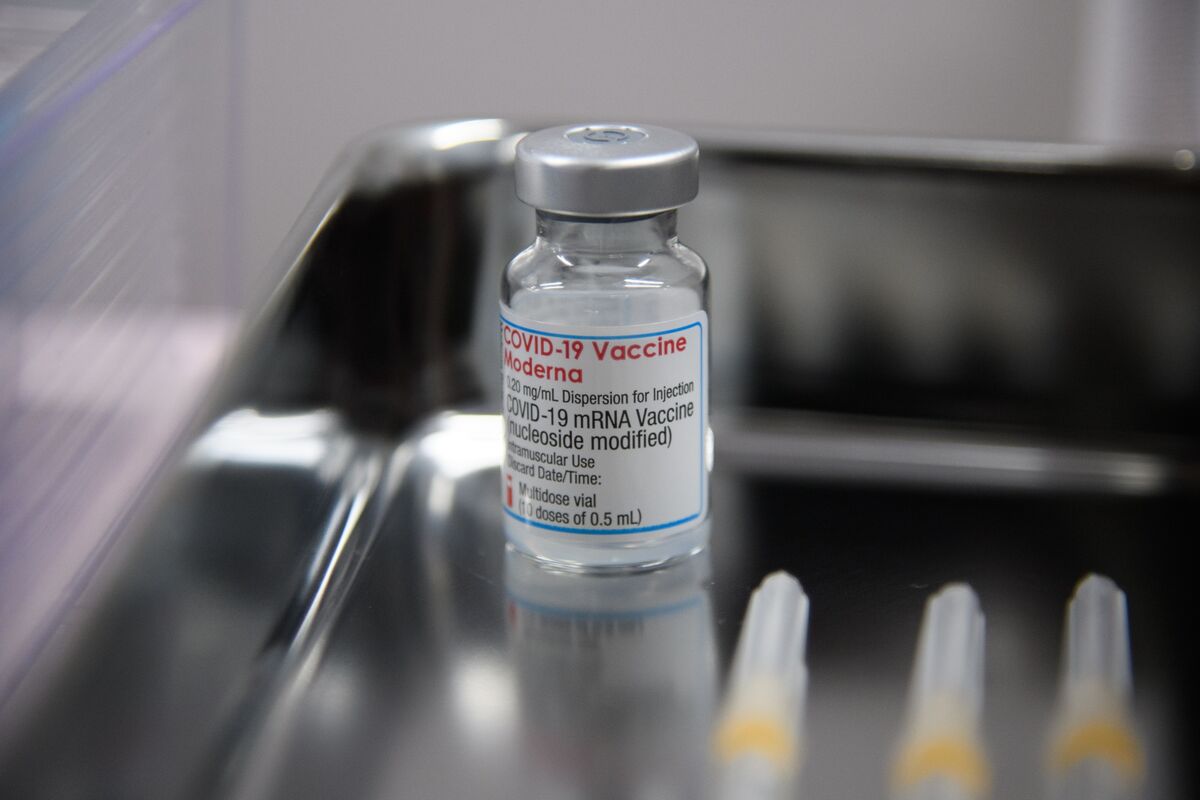
Moderna Inc.’s Covid vaccine generated more than double the antibodies of a similar shot made by Pfizer Inc. and BioNTech SE in research directly comparing immune responses to the inoculations.

A study of almost 2,500 workers at a major Belgium hospital system found antibody levels among individuals who hadn’t been infected with the coronavirus before getting two doses of the Moderna vaccine averaged 2,881 units per milliliter, compared with 1,108 units/mL in an equivalent group who got two jabs of the Pfizer shot.

Adblock test (Why?)


"many" - Google News
August 31, 2021 at 09:54AM
https://ift.tt/3jtj0qt

Moderna Creates Twice as Many Antibodies as Pfizer, Study Shows - Bloomberg
"many" - Google News
https://ift.tt/2OYUfnl
https://ift.tt/3f9EULr

Many Afghans start their new lives here - KRWG

tetekrefil.blogspot.com

  Commentary: Thousands of Afghan refugees whisked to safety during the massive evacuation that concluded this week experienced their first taste of freedom here in Dona Ana County.


The Dona Ana Range Complex, a part of the Fort Bliss Army base that extends into Dona Ana and Otero counties in New Mexico, is being used as a temporary holding site for those evacuated from Afghanistan as part of Operation Allies Rescue.


As many as 10,000 evacuees are expected to be processed there. The Department of Defense has said that up to 22,000 Afghans have been approved for transport to the United States.


Those fortunate enough to begin their new American experience here will find a warm welcome. Volunteer assistance is being coordinated through the American Red Cross. El Calvario Church in Las Cruces, which has been helping to care for new arrivals to our country for many years, is collecting hygiene kits and basic supplies for those who will be taken to Holloman Air Force Base in Otero County. And, they are working to help find housing options for those who want to stay in the region.


The deadly attack at the gate leading into the Kabul airport last week in which 13 U.S. troops and many more Afghans were killed provides tragic evidence as to why people are so desperate to leave.


Taliban leaders who now control Afghanistan say they will not retaliate against those who have aided the U.S. military effort for the past 20 years, but those assurances are not believable.

Immigration opponents will argue that people throughout the globe live in dangerous conditions, and we can’t take them all in. But the threats faced by those now in Afghanistan are of our own making.


We weren’t invited to Afghanistan. We came seeking vengeance and retribution following the worst attack on our nation since Pearl Harbor. Somewhere along the line, that morphed into a 20-year attempt to rebuild that nation in our image. That was our decision.


Our initial success in rooting out the Taliban was due to the overwhelming might of our military. But any successes we had following those first days were achieved working in partnership with our Afghan allies.


Solemn commitments made on the battlefield can’t be forgotten once the battle ends.


We brought the war to Afghanistan and forced them to pick a side. Those who joined with us ended up on the losing side, and their lives will be in danger until they are able to leave the country.


Of course, anybody coming to the United States will be carefully vetted first. They should also be tested for COVID-19 and vaccinated. But, thousands are on their way, and will be beginning their new lives in America soon.


I look forward to the contributions they will make in the coming years, and am glad that our community can help get them started on their American journey.


For those who disagree, and see any immigration not coming from Europe as a dilution of our culture, I would advise them to keep that in mind the next time a president wants to lead us into war on spurious grounds, such as the mythical weapons of mass destruction in Iraq.


Colin Powell was wrong. There isn’t a rule at Pottery Barn that if you break something you have to buy it. But that rule should apply when it comes to using our military to break other nations.


This is our mess. We are responsible for putting those who helped us in danger. It is now our responsibility to bring them to safety.

Adblock test (Why?)


"many" - Google News
August 31, 2021 at 01:27AM
https://ift.tt/3sXSVTQ

Many Afghans start their new lives here - KRWG
"many" - Google News
https://ift.tt/2OYUfnl
https://ift.tt/3f9EULr

America leaves its longest war behind, and many wonder what the point was - NBC News

tetekrefil.blogspot.com

After almost 20 years, a heavy cost of lives, and a price tag of some $2.3 trillion, America has exited its longest war.

President Joe Biden oversaw the end of the United States' withdrawal from Afghanistan on Monday, when the last aircraft carrying military personnel left the airport in Kabul. Military officials said the final operation went smoothly, with the cooperation of the Taliban, but many in the U.S. and around the world wondered what had been achieved after such a colossal sacrifice.

The Taliban, toppled by the U.S.-led invasion in 2001, are already back in power, sweeping aside the Washington-backed Afghan government in a remarkably swift offensive.

"The past 17 days have seen our troops execute the largest airlift in US history, evacuating over 120,000 US citizens, citizens of our allies, and Afghan allies of the United States," Biden said in a statement.

"Now, our 20-year military presence in Afghanistan has ended," he said, adding that he would address the nation on Tuesday.

But it may be the Taliban who have the last word.

"Without a doubt, the Taliban are victors," Zabihullah Mujahid, the group's senior official and spokesman, told NBC News on Thursday. "There was no justification for this war."

Afghans on the road to Kabul airport in August.Marcus Yam / Los Angeles Times via Getty Images

The militants say they have become less hard-line since the oppressive, militant theocracy of their last regime. But their rapid reinstatement has caused deep anger — from Afghan civilians who now have to live under the militants' yoke, to the friends and families of U.S. service members who gave their lives.

Biden has come under heavy criticism for the way the withdrawal has been handled. That peaked last week when a suicide bomber struck Kabul airport, killing 13 U.S. service members and at least 113 Afghans — a grim coda to a chaotic evacuation effort.

Download the NBC News app for breaking news and politics

The U.S. hit back with a drone strike against what it said was an Islamic State Khorasan group, or ISIS-K, target that posed an "imminent threat" to the airport. It said it was looking into reports the strike also resulted in civilian casualties.

Thousands of desperate Afghans have for weeks mobbed the airport's perimeter, desperate to board flights that offer the promise of a new life in the West. More than 80,000 people have been airlifted, including 6,000 Americans.

But most Afghans who wanted to leave have now watched the final airplanes associated with the official U.S. withdrawal take off from the runway.

Aug. 30, 202105:06

'The world has come together'

In a conflict that has spanned four presidents — George W. Bush, Barack Obama, Donald Trump and Biden — around 170,000 people have died, almost 50,000 of them Afghan civilians, per data compiled by Brown University.

That toll includes more than 2,300 U.S. service members and 3,800 American contractors, according to the Pentagon and Brown.

It was a conflict triggered by 9/11, an attack orchestrated by Al Qaeda leader Osama bin Laden while he was given safe haven by the Taliban. Backed by the United Kingdom, Canada and Australia, the U.S.-led invasion was the opening salvo in the "war on terror" that would irrevocably shape U.S. foreign policy and with it the world.

"The attack took place on American soil, but it was an attack on the heart and soul of the civilized world," Bush said in October 2001. "The world has come together to fight a new and different war, the first, and we hope the only one, of the 21st century."

At one point in early 2002, just 6 percent of Americans said the war was a mistake, according to the pollster Gallup. Last month, that had risen to 47 percent.

Biden speaks at the White House on Aug. 26 about the situation in Kabul.Drew Angerer / Getty Images

The U.S. plowed hundreds of billions of dollars attempting to rebuild this failed state: inculcating a democracy, retooling its military and reforming social norms such as allowing girls to be educated and women to be able to work outside the home — something banned by the Taliban.

But the country remained dogged by rampant corruption, something some experts have blamed in part for the U.S.-funded Afghan army's crumbling in the face of the Taliban this month.

And for years, the militants have held onto large swaths of the country. The U.S. has long conceded that vanquishing the militant group entirely would be impossible, even after Obama's "surge" of nearly 100,000 troops in 2009.

Obama formally ended combat operations in 2014, instead pivoting to what the U.S. called a "train, advise and assist" role in which a pared-back force would assist the Afghan army.

Last year, Trump negotiated a deal with the Taliban to withdraw U.S. military personnel by May 1 of this year. After he was inaugurated, Biden said the withdrawal would be completed by the 20th anniversary of the 9/11 terrorist attacks; he later upped the deadline to Aug. 31.

Adblock test (Why?)


"many" - Google News
August 31, 2021 at 05:02AM
https://ift.tt/3jwAB13

America leaves its longest war behind, and many wonder what the point was - NBC News
"many" - Google News
https://ift.tt/2OYUfnl
https://ift.tt/3f9EULr

An Afghan YouTuber was killed at Kabul airport. Many more fear the worst. - CNN

tetekrefil.blogspot.com

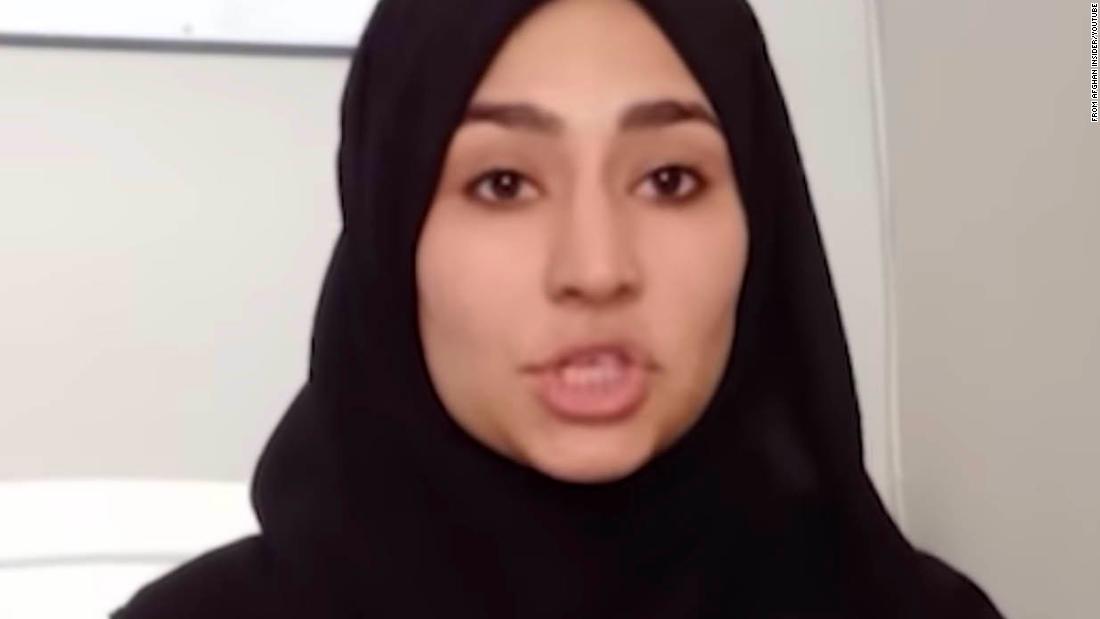
(CNN)Four days after the Taliban's takeover of Afghanistan, 20-year-old YouTuber Najma Sadeqi sat on her bed and recorded a final video to tens of thousands of followers.

Usually, her posts would show her cooking or exploring Kabul alongside her friends, in bright clothes and with cheerful music playing in the background. But before Sadeqi even began speaking, the dispirited expression on her face told viewers that this one was different.
"Since we are not allowed to work and go out of our homes, we all had to record you a last video," she began. "And through this video say goodbye to you all."
She told viewers she was too scared to walk the street, and asked them to pray for her. "Life in Kabul has become very difficult, especially for those who used to be free and happy," she said. "I wish it is a bad dream, I wish we can wake up one day," she added, stopping at times to stifle tears. "But I know that it is not possible .... and it is a reality that we are finished."
Days later, Sadeqi was killed in a terror attack outside Kabul's international airport, two of her colleagues told CNN. At least 170 Afghans died in the atrocity, while trying desperately to flee the country.
Sadeqi was in the final year of study at a journalism institute in Kabul. She had recently joined the Afghan Insider YouTube channel, whose videos have amassed more than 24 million views. They gave weekly glimpses into the lives of young content creators, who had been raised amid the relative safety of a post-Taliban age. They also allowed Sadeqi and others to support their families, while following their own aspirations.
"I was working to make enough to pay for my daily expenses and for my education," Sadeqi said in her last video. "Most of the families in the city are just waiting for (one) meal for the day to survive now."
Her death has rattled a broad community of young YouTubers who have enjoyed the freedoms afforded to Afghans in the two decades since the last Taliban regime was removed -- many of whom do not even remember the pre-9/11 days.
And it shone a devastating new light on her final video -- an emotional eight-minute goodbye to those who had watched her work. "Dear friends! We are both mentally affected and physically have become vulnerable," she said. Sadeqi would usually co-host videos with her friend, Rohina Afshar, but the pair were forced to record their last messages separately, for fear of leaving their homes.
Even before the attack at the airport, many vloggers had gone dark. They included Afshar, who confirmed her friend's death to CNN.
"I was the only breadwinner in my family as my father is dead and my brother is not old enough to work," she told CNN. "With the salary I used to get from the YouTube channel I was paying for all our expenses. Now I am jobless, I am too scared to go out and we have got no income at all. I don't know how can we survive this situation.
"Besides economic hardships, I am very worried because a lot of people know my face as I used to work for media," she said. "I have been hearing rumors that certain groups identify girls who worked for media like me so that they can go after them. I don't feel safe at all."
Afshar, who said her life has been "flipped upside down" in the space of just a few days, reflects the desperation of countless women and girls across Afghanistan. "In the last ten days or so that I am at home I am totally depressed," she said. "I don't know what to do."
YouTube has become a prominent platform in Afghanistan in recent years, shining a light on the country's nascent democracy and providing a valuable platform for aspiring journalists like Sadeqi and Afshar.
But Khawja Samiullah Sediqi, who worked at Afghan Insider, now fears for those who produced videos for his and other channels.
"In the last couple of years dozens of young and talented Afghan boys and girls started working for YouTube channels, not only to make a living, but to find a platform to prove themselves and the progress Afghans had made in the last two decades," he told CNN.
"But in the last couple of weeks everything changed," he said. "We stopped producing new stuff, we are scared of being targeted, intimidated or harmed."
One of the channel's reporters was physically attacked while reporting from Kabul airport, he said. "We are too afraid to use our right of speaking freely and we are totally unsure about tomorrow."
And Sediqi said he is concerned that the plight of young content creators, spread across the new media landscape, may be overlooked by the global community.
"I know many journalists working for traditional media have been provided with help and support by their employers and other organizations protecting journalists, but no one has paid attention to us," he said. "Working for social media platforms like YouTube is somehow a new phenomenon in Afghanistan, but the nature of our work is the same as any other TV channel."
"We became a bridge between Afghans living outside and poor people living in the country," a fellow female YouTuber for another channel told CNN. "We are in a difficult situation. They shouldn't abandon us like this."
CNN is not naming the YouTuber, who like Sadeqi is in her early 20s, due to safety concerns. "Yesterday, it was Najma's turn. Maybe tomorrow it is mine, and the next day, another girl's," she said. "Najma had found my number from somewhere and she texted me (to ask) if I was OK. I still have those text messages ... even until now I can't believe that she is gone."
"I feel so hopeless; all my dreams were crushed. I even can no longer help my younger brothers, (and) my mother who also can't go to work now," she added of her life under Taliban rule. "We are in a difficult situation. They shouldn't abandon us like this."
"Today's Taliban are different from the previous ones since they have access to smartphones now, they have access to the internet," she said. "Some of them probably can easily recognize me ... since the day they have entered Kabul, I have not gone out of the house at all."

Adblock test (Why?)


"many" - Google News
August 31, 2021 at 03:16AM
https://ift.tt/38qRsvM

An Afghan YouTuber was killed at Kabul airport. Many more fear the worst. - CNN
"many" - Google News
https://ift.tt/2OYUfnl
https://ift.tt/3f9EULr

Evacuations ordered in South Lake Tahoe amid Caldor fire - Los Angeles Times